
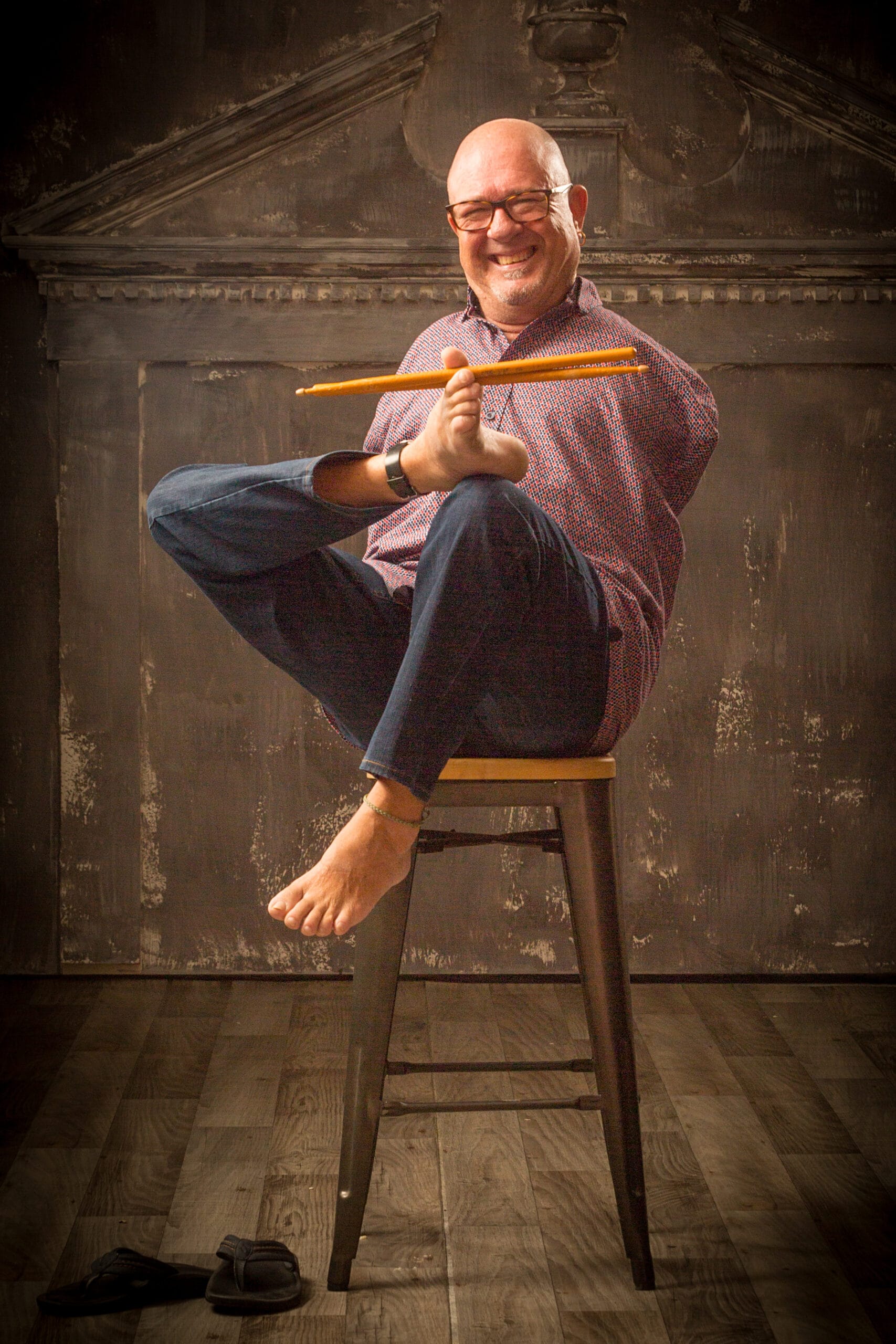
In this episode, I sit down with Alvin Law – an international Hall-of-Fame keynote speaker, Emmy Award winner, and award-winning musician who was born without arms and built a remarkable life by refusing to let other people’s labels define him.
Alvin and I talk about what it really means to step into your greatness when your life doesn’t look like an Instagram highlight reel. We explore how his parents, teachers, and coaches acted as “Yes, And whisperers” – choosing to see possibilities instead of limitations – and how that mindset helped him learn to eat, drive, play multiple instruments, and build a global speaking career - using only his feet!
We also dig into the tension so many professionals feel today: The gap between “mundane real life” and the glamorous lives they see online. Alvin shares why ordinary work and steady contribution are not the enemy of greatness – they’re the training ground for it. From workplace complaints about remote vs. in-office work, to the trap of seeing yourself as a permanent victim, Alvin offers a refreshingly direct wake-up call: Value yourself, own your choices, and stop waiting for someone else to hand you your future.
If you’ve been feeling stuck, labeled, or a little too attached to your excuses, this conversation will challenge you to rethink what’s really possible when you bring a Yes, And mindset to your life and work.
Key Takeaways
Why Alvin believes his lack of traditional credentials (and lack of arms) actually makes him uniquely qualified to speak to high-level leaders about the human side of business.
How his parents and first-grade teacher changed the rules – literally – to get him into a mainstream school, and why that decision shaped the rest of his life.
The difference between being a true victim of hard circumstances vs. choosing to live from victimhood.
What it means to be a “Yes, And whisperer” for other people – and how a single teacher, coach, or manager can transform someone’s life trajectory by saying, “Let’s try.”
Why Alvin no longer leads with his list of awards and achievements (including an Emmy and multiple Hall of Fame honors) – and why he’d rather focus on the impact of his story on the audience’s life.
How imagination defines the difference between seeing obstacles and seeing possibilities – and why most people drastically underestimate their capacity to learn new skills.
Practical advice for office workers and human resources pros who feel stuck: How to increase your value, navigate the in-office vs. remote work debate, and stop waiting for your boss to fix your career.
A simple daily practice: Looking in the mirror and asking, “What kind of impact am I going to make on people today?”
Links
Alvin’s website: https://alvinlaw.com
Alvin’s book: Alvin’s Laws of Life: 5 Steps to Successfully Overcome Anything (search on Amazon or your favorite bookseller: https://a.co/d/8bxcfVO
Alvin on YouTube: https://www.youtube.com/c/AlvinToesLaw/videos
Unedited Transcript
Hello, Alvin and welcome to the podcast. How are you, sir?
Alvin LawGood. I'm just trying to push.
There we go. I'm excellent. Thank you, sir.
How are you?
Avish ParasharI am doing fantastic doing even better now that we are about to chat about you and all your brilliance. I do have questions I want to ask you, but before I jump into them, let's just start for people who are unfamiliar with Alvin Law. Could you just give us the one minute sort of overview of who you are and what you do?
Alvin LawI've had a 37 year career in motivational speaking out of Calgary, Alberta now out of another place in Saskatchewan called Regina or as we call it in Canada, Regina. That's a whole other joke on its own. And I have been doing this for it feels like my entire adult life. I am a keynoter and I talk largely about my life which most people when they see me want to know, hey man, what happened to you? Well, I was born without arms.
Avish ParasharSo that is what people notice.
Alvin LawI'm a foot user. So that's the second thing they notice. But all of this is all about just It's my life story. I'm one of those people that talks about all the things I've learned through Challenge and all the buzzwords that go along with having this particular situation. I'm also a musician and we can talk about how that happened later but I'm just really, really incredibly long career that feels like it just started yesterday.
Avish ParasharYeah, it's pretty fantastic and obviously if you're watching this on one of the YouTube videos you can see Alvin doesn't Have arms born that way. But, you know, for the podcast people, that's kind of how you started. And it's funny, you just kind of casually dropped in like, I'm a musician. And, you know, when I first learned about you as many years ago, and they're like, oh, this guy without arms who like drums on stage. And I'm like, oof, someone's really raising the bar for what keynotes need to do here. In the world. So there's so many directions to kind of to start with in terms of your story and what you're doing and how you're helping organizations.
And I'm gonna try to go against my instinct, which is to start by asking all sorts of questions about your story, your history, your background. And let's just start with kind of what you're doing as business. And I'm sure all those other questions will come out through our conversation, but I just want to know, if someone hires you to come speak to their, their conference or work with their group, what, what are you helping them with? Like, what is your objective when you go in?
Alvin LawI appreciate the business question and I can use so many different examples, but one of my favorite ones, and this is again just a bit of a dated story, it goes back to about 2016. In 2001, actually, I started working extensively in England. So I started to get to know people. I was working with executive coaching organizations that in North America we might call Vistage or TEC or one of those. This was a dedicated organization in England called the Association of Chief Executives. And what I realized was I don't have anything but a broadcasting diploma from a community college in Canada from 1980. That doesn't exactly qualify me to speak to the Harvard MBAs, but it actually qualifies me to speak to the Harvard MBAs because I'm not there to talk about MBAs.
I'm there to talk about the human behind the business model. And in England, I was going to speak for an organization where a pal of mine, a guy that I'd met actually through their Professional Speakers Association, decided to take over a company that had been owned by the British government. And it was going into private enterprise, basically a survey organization. So we might call it a polling company. They had to get out of their government mentality into a private enterprise one. And they needed somebody to come in and start their three day reading of the future documents to their people with somebody who could start up by saying, here's what's gonna happen now. Your life is about to get really hard.
Your life is about to change dramatically. You're not gonna be allowed to be.
Avish ParasharA slacker government worker anymore with due respect.
Alvin LawThat was what the CEO wanted, and that's what I have delivered. So he could come in and his executive team can come in and they actually produced a banner that they did after I spoke there that they hung on the main wall of their work room that said, what would Alvin do? So that's the essence of what I do. I come in and give people an idea of my life and it takes its own life to their own meanings, to their own corporate culture. I work a lot with companies and their mandates, their mission statements, but more than anything, Hey, man, I'm going to say it. I'm a breath of fresh air. I don't come in and bitch and complain about having no arms.
I come in there and say, Hey, I got no arms. That may not be fair. Your life may not be fair. What do we do about it? So that's in a nutshell what I would do.
Avish ParasharWell, I will say, I haven't seen you deliver your keynote, but I did, as I'm reading your book, I would think that after hearing you speak and seeing the attitude you do around your story and reading about everything you kind of had to go through and learn, It's really hard then for a person to look at their own life and be like, oh man, things are so hard because, you know, oh, I got an extra meeting or something or oh, my budget got cut by 10% and man, I am so unlucky in life. It's like, oh, wow, let me reframe and put some perspective on it. I'd assume that's one of the big takeaways that people get from-- because you have such an amazing attitude when you speak both on stage and just.
Alvin LawChatting with you now. Well, thank you. And by the way, I do a lot of this idea no matter where I'm speaking, and that is, I don't care what people do for their living. Maybe my son would be the most perfect example of this. We went through a kind of a State of the Union address with my son who's now 40, who viewed his life as mundane. And I told him, I don't know what the exact number is, doesn't matter, but he's probably here in Calgary, he's a power engineer, he's probably clearing 85, 90 grand a year. Goes to work, gets there by 6:30 in the morning, checks out about 5:00 in the afternoon, goes there five days a week, is single, used to have a cat, it died, sad story, but his comment was, is this real life?
And I went, honey, that's real life. Real life isn't your dad rocketing around the world, doing speeches, playing drums on stage, doing a concert in Japan with Katy Perry like I did in 2022. You know, that's just a drop point that I can throw at your audience to say, I've done some pretty cool things. So has some of you out there watching this. Movie stars, rock stars, people on the internet that are influencers, they look like they've got these incredibly perfect lives. Well, I can tell you, first, they are far from perfect, but second, with due respect, that's not real life. Real life is going to a job that is mundane, that is boring, that doesn't give you a lot of personal realization of your meaning for life.
So I try to remind people, that is your normal. But if you want to do better, if you want to raise the stakes, if you want to be able to say, well, I want to do that, then I'm here to tell you, well, then go do it. I mean, it sounds easy. It's not easy. That's why I use my story to say, you really think this was easy? I make it look easy, like all of the professionals, you know, the baseball players that throw wicked curveballs, like in the World Series, or people that hit a tennis ball 160 kilometers an hour. That's not easy, but they sure make it look easy.
Avish ParasharWhy?
Alvin LawBecause they prepare, they practice, and then they perform.
Avish ParasharYeah, and I think, you know, so my whole background is in improv comedy, so I talk about making this mental shift from yes, but to yes, and and you're not to make your story about me, but yes, I'm reading your book and seeing about your story, I realize how many of those things would just in your life could you have just said, yeah, but to like, and there's something just, and I want to get into this in a little bit later, I'll talk more about that, but just the basic gist of how like the things that I would assume a person with no arm just couldn't do, right? Like, try to play the piano, play the trombone, play the drum, just, I mean, eat and drink and you know, you have an opening story about eating like a saucy plate of ribs, I'm like, with your feet, I'm like, but these are every single thing. I'm like, you know, but you can't do that, but you can do that. And like every single step of the way, kind of like to your point about saying, oh, if people are like, oh, here's something I wanna do, just go do it. Like, it's just you've been just saying yes and over and over again.
Pretty much our whole life.
Alvin LawBut here's the deal, brother. It wasn't me that was saying yes, and it was my parents, my first influencers, to use a modern word, but not in that word didn't exist in 1960 when I was born. Yeah. To get into it just for a second, I think this is a really important part of the story and not to get into storytelling mode here, but I think the most powerful thing that happened to me besides being born without arms, which obviously would have an impact on my future, was I was also homeless when I was five days old. When people hear that, they go, well, that sucks. No, actually it's the opposite. Thank God, the people that gave birth to me didn't want me because if you're not wanted, what kind of home life would that have given me?
So I was adopted by people that did want me, if you imagine that mindset. But the key to this was they weren't looking for a child to adopt because they'd already raised their own family. So they had a foster home and they took in troubled youth or hard to place children. Like me, I never was able to find another home, so they kept me. My mom was 55 years old the day she took me home.
My dad was 53. That sounds romantic, but what it means to me in a story is they were wise. They weren't young people trying to prove how beautiful their children were with due respect. They had this kid without arms and they were like, okay, what do we do now? And this was not in a time when there was like, hey, Google or Siri or is there a YouTube video for this? They had to figure it out. But what they knew because of their lives, here we go again, life isn't easy.
So what do we do? So yes, it becomes an and instead of a but. That's brilliant man, by the way. It's a very powerful way to think of a challenge. And what do we do? So I learned to use my feet. Of course, that was the first thing.
I don't remember. All I remember is from the time I have a memory, these were my hands. So whether it was eating or drinking or washing my face, And they made me do these things not because they were mean, but because they knew life is hard. I mean, my dad was a mechanic. He'd bring home nuts and bolts from work and I'd, you know, screw them on and off and on and off with my toes for hours.
Avish ParasharI'm just like, that's amazing.
Alvin LawI know, but what was that? So I could be a motivational speaker someday and go out and dazzle people. No, because they knew I needed A to be independent. But now this is where it gets very, very critical. I mean, this is my opinion, my approach. I learned very quickly, you gotta fail.
Life is full of failures. And then when you finally figure something out, those failures and then the success tells you, well, when the next one comes along, I can overcome that too. So overcoming having no arms was very, very small in terms of the dynamics of my upbringing. The hard part was society. Like you said, restaurants going in and having, you know, it is funny, man, if you think about eating ribs with your foot, I hope people aren't having lunch right now. By the way, is this audio or visual?
Avish ParasharIt's gonna be both. It's predominantly an audio podcast, but I do post the video on YouTube, so.
Alvin LawCool, but if people don't want to imagine it in an audio format, stop driving your car right now. I lick my toes off when I'm done. That's not so I can freak people out because I'm licking my fingers. It actually took me an experience with my wife to make me realize, she goes, honey, do you realize how gross that looks? In a comical way. But in the other side of this, I guess it's just not funny. Some people don't see the humor in failure or they don't see the humor in their lives.
And I'm not trying to be preachy about this, but I think that is exactly the point. I didn't have a choice, brother. I mean, I could, I guess I could have been a welfare victim with due respect. I could have let the government of Canada take care of me. I could have lived in social housing, but I've never gotten a government check. Because I'm an entrepreneur. I always believe there's a way around this.
There's something you can do. But it was my home upbringing that made me understand hard work pays off. And that's what I did. The fact that I do it with my feet to me is insignificant. But hey, man, I totally get it. You should see the look I get when I get to the exit ramp for the Avis and Hertz dealerships in airports where I'm renting a car, steering with my right foot on the wheel or my left foot on the gas. That's how I drive.
The look on that person's face, drive-throughs. Those are hilarious. Can you imagine getting up to a drive-through, that'll be $9, you know, and I give them the money with my toes? Actually, it's funny if you're in the car behind me, 'cause all you see.
Avish ParasharIs-- I would almost assume that some of those drive-through workers assume you're like, you've just got your hands behind your back and are messing with them.
Alvin LawYeah, but here's what I do. See, this is the key, and this is something I learned.
I tell them. My wife told me this. She goes, tell them. I said, honey, I'm tired of talking about myself. By the way, I got tired of talking about myself a long, long time ago. But if I don't talk about myself, there's no credibility in the story. So, you know, it's like she says, well, what do I do?
She goes, tell them, just tell them why you're giving the money with your feet. You know what it's done, man, frankly, I can have a motivational impact on a person in a booth at a fast food restaurant in 30 seconds because they're smile, they look on there, because they're in a booth. I'm sorry, that's not exactly an exciting job either. But I've heard people tell me, hey man, you gave me a smile. You made me laugh a little bit. You were the highlight of my day. Thank you very much.
You put that in the context of a speech. That's where it gains real traction.
Avish ParasharWell, that's amazing. I want to get into some of the content, but I just want to refer back to something we were talking about. You said it was your parents who were the first, the real kind of yes, anders. And I think that's one thing that really struck with me as I was reading about your childhood And you know, one thing I talk about is as people, one thing we can do is be a yes and whisperer to others, like help others be the person that helps them say yes and to themselves. And I was struck by that through your story. How many different people did that with you? Like, obviously it started with your parents who were amazing, but then you had like a baseball coach who was like, instead of saying, oh, no, you can't play baseball, I was like, oh, well, come on, we'll maybe be a pinch runner.
And then the music teacher and then another music teacher, and they all were like, maybe initially were like, eh, but then they. Came back to you and we're like, you know what? I'm thinking about it.
Let's give this a try. And to me, that's such a powerful lesson for us. Like, maybe it's not even about me achieving all my goals. Like, can I help? Can I just say yes and to someone else and help them? Because the impact, the ripple effect those people had on the world through all the people you've touched with your message is so wide reaching as well.
Alvin LawAbsolutely. I mean, my most favorite example in the millions of stories that I own, It's pretty close actually, was really this one. If you imagine in 1966, children like me, not just without arms, because that's extremely rare, but children with severe disabilities, they call them crippled back then, had segregated schools. I mean, we all talk about the segregation of colored people. What about segregation of people with disabilities? That's a real thing. So there was a segregated school in our community in Canada, not a very small place, 10,000 people, but not a big, big place.
That's where I was supposed to go to school. And here's the irony. The street from a public elementary school. My parents are going, why can't he go there? And they're going, because we've never done that. And my parents are going, gee, we haven't done that either. So why don't we collaborate and make this happen?
Well, in fact, they had to change the rules at the school board level to allow a disabled child into a public school. And because of that, changing the rules, disabled children have been going to public school in York and Saskatchewan, Canada, ever since 1960.
Now, did I do that? No. Did my parents do that? Not really. Who did that was the school board. The school board changed its policy not because of little Alvin, but because we know in 2025 or 26, that was the right thing to do. So because I go to school, that's where I know I have to learn.
And that's where I know I have to go through the grades because they're not going to give me an age just because I have no arms and I'm kind of cute. That wasn't going to happen. So those things transpire. But here's the best story ever regarding that. I mean, the music story is my favorite, but this one's even a better example. My first grade teacher was 18 years old when she took the job.
Avish ParasharWow.
Alvin LawYou didn't have to go to university back then. You could get a teacher's certificate and it wasn't online. It was through these little schools in these little towns where you'd get a certificate. So she goes into her classroom. She's there on her first day. One of her students has no arms. And she turns out to be one of the most powerful influences in my life.
In her words, it was because she didn't know what she didn't know. So fast forward to like 1997 or 1998 back in Saskatchewan, we're out at a public event who I spotted my first grade teacher. My wife is with me, my second wife. I had a practice marriage, by the way. My second wife is with me and she knows all about my stories. And I say, oh, I want you to meet Mrs. Plosz, my first grade teacher.
So we go and introduce Mrs. Plosz gets all teary eyed, gives me a big hug. My wife says, It's a pleasure to meet the woman that changed my husband's life. And she says, I may have changed his life, but he changed mine. So imagine what I did.
What did I do? Well, I didn't do anything except I was an odd student. So she had to learn running on the ground how to be a better teacher. That's what I do for a lot of people. Yes, they give me an opportunity. Yes, they give me a chance to be included in the world. But at the same time, and that's why this whole thing right now going on with diversity, equity and inclusion is really very annoying because I understand the concept.
I didn't ask for special treatment ever. I earned every job I've had. But at the same time, we need to be a more welcoming society, don't we? We need to be a more including society because all of us come from the same place. I won't tell you where that is, but all of us are born the same way and then we live and then what do we do? And I've had the good opportunity of traveling the world to experience the same connection with people in every corner of the planet. That's been very powerful for me to see. Wow.
Avish ParasharWell, I want to touch on something you mentioned with both your teacher and yourself. And it's very related because I literally just today posted a LinkedIn post article about this, which is, you know, you said the teacher was new and she didn't know what she didn't know. And you talked about when you went to the MBAs, you went to speak to the CEOs and you're like, I'm not an MBA, I can't. And I literally just posted about the fact that I have been doing improv for 30 years and speaking about it for 20 and I have zero formal improv training. I never took a class at Second City.
Alvin LawReally? That's very improvisational to love you alone.
Avish ParasharWell, it is, it is. And how, like, this was a source of insecurity because I'm like, oh, I'd find another speaker and they're like, oh, they trained at Second City. Well, of course you'd hire them over me. But it took me till recently to realize that, oh, that's actually a strength because unlike. Everyone who's gone through a formal system of training, they all teach the same way and the same principles.
I've developed my own approach. So I wonder if you could talk a little bit about that about, you know, with the MBAs and, you know, like you said, you just had a communication degree, I believe, from a degree from community college. And then, like, how did that work into your life? Because I can only imagine you're very positive, but I can only imagine there's some level of doubt or insecurity just as you're kind of going out in the world about how people are going to judge you.
Alvin LawSo how do you kind of deal with that and how did you use.
Avish ParasharWeave that into your business.
Alvin LawWell, I think the era is a very critical part about this brother. It really is. I don't try to be an old guy. I don't go backwards and go, gee, I wish it was the old days because the old days weren't all that great. But in those days, back to what I said a minute ago, there wasn't some kind of path I could follow for a guy without arms.
Avish ParasharYeah.
Alvin LawSo everything I had to do, I had to earn, as I've said now twice, but part of that was being qualified. So when I was looking at what I was going to do for a career, And again, people can find this out on their own. We probably won't get to it today. But the first instrument I ever played in my life was the piano, but I wasn't very good at it. So nobody would give me lessons. So I gave up on that. And then I was ready to give up on everything.
And then a band director in this town, not to jump stories here, mounted a trombone on the side of a wooden chair with metal rods and clamps with the help of several teachers at the local high school that made it all by hand. So I could play the slide with my foot like this and be in band. Why that story is important in my answer to you right now is because I thought I could be a musician. And I got to be so good, fact, I was the number one ranked high school jazz trombone player in Canada in 1978. Really? Because I had competed in over 100 music competitions. I won over 75 gold medals.
And then I was given the honor of being first chair trombone in Canada's national all-star high school jazz band. That meant several colleges across North America were inviting me to be a music major student. I was gonna do it. I wanted to be, as they say in my colloquial, as I do in my speech now, I wanted to be a rock star.
Why wouldn't I? I even learned to play the drums and I'm really good at it. Then my guidance counselor said, Alvin, moment of reality. Nobody's gonna hire a musician without arms. Sorry, son. It's just not gonna happen.
Avish ParasharWe love you here, but the reality.
Alvin LawIs you have a big default in your life. And that is people are not going to see the talent. They're going to see now I'm going to use a bad word, but this is how much I love this guidance counselor. They're going to see a freak, not a musician. Now we've learned that's not right, but that was the truth in 1977. So I went into broadcasting because if you close your eyes or you're listening to a podcast on audio, do I sound like I have no arms? No. So I developed a very skilled voice.
That voice also led me and, hey man, the linkage is not made up here, brother. I had to improvise. I was an honor disc jockey. I had to use my knowledge. We didn't have internet. I couldn't go research bands by, you know, that. I had to use my own knowledge in the music library of our station.
But that station gave me a public persona as a broadcasting personality in a relatively small fishbowl. And I started getting invited to being an MC. Here's Alvin Law from the local radio station. I would do a little speech at a dinner for Rotary or something. And then somebody said to me, you can make a living at this. And that's how 1988 became the year that I started my own company. But that experience with communication, with my skill and ability to talk, also made me understand.
Everybody'S got a story. And the story may very much be about the accounting department or balancing the sheets or being good to your shareholders. But if I may talk about your personal life, my friend, most of these people have another life. And that's the real one. The life of partners, the life of children, the life of grandchildren. You can be the best executive in the world, but that doesn't make you successful at home. Which one do you want to focus on?
I'm not judging. I'm just saying, I want to remind people the real life part of your humanity is an incredibly important part of your professional abilities. So I tie the two together. And I use again my stories to say that's what it is. But here's the best leadership story ever. Leaders get other people to do stuff. And that's what these folks were doing with me.
They weren't doing it for me. I had to do my own chores. If my mom would have made my own bed, how would I have learned to make it? If my mom made me do the dishes, I had to mow the lawn. I had to shovel snow in Canada with my chest. I had to take out the garbage in my teeth. I mean, God, that was nice.
Guess who likes to do the garbage in our house in 2025? Me. So the reality is you learn skills that aren't just about MBA skills. And by the way, I have nothing but respect for people with letters behind their name because they've completed that thing too. But at the same time, and we've discovered this, especially through COVID, we're all people first.
Avish ParasharWell, let's get into that a little bit then before we wrap up. We talked about your background and kind of the bigger picture stuff. But when you go in and work with teams, with leaders, I know in your book, and I saw on your website, that you, since your name is Alvin Law, you've sort of created Alvin's Laws, which is, you've turned Alvin into an acronym. Is that still, oh, there it is the book, Alvin's Laws of Life.
Alvin LawHere's product placement, product placement, product placement.
Avish ParasharAnd we'll link to the book and to the website. But I wonder if you could take us through kind of, Is that still kind of the cornerstone of when you're working groups that you kind of take them through the five steps? Or, you know, I know the speakers were constantly evolving and moving on.
Alvin LawWhat I did, and this is a great question and I'll give you an uncharacteristically brief answer. Around, I don't know, it was probably 2002-2003, I had the first ever in my life of a repeat client. Now, I have had some repeat clients, but there's a gap in years, usually in between. In fact, I just did an event in Winnipeg in June that I had done 10 years earlier. That's not the point. The point is most clients, once they've heard me speak, they will not bring me back in the next following year. A client that was actually an executive coaching client wanted me to speak back to back eight months apart.
I had done my show. I had talked about my life story, the one we're alluding to today. They wanted something fresh and brand new. So not, this is absolutely the, it's another great story. I sat out on a ferry ride from Vancouver to Victoria, British Columbia, and in 17 minutes crafted my own version.
Of Stephen Covey's seven habits. And because my name is Alvin Law, I called it Alvin's Laws. And to be even more clever, yuck yuck, I used my name. So A-L-V-I-N, attitude, learning, valuing your life and spirit, imagination and never growing up or never giving up. And never growing up, that was a Freudian slip. And then the five of them also have a paragraph and they're exactly like a company or corporate mission statement. I call it my personal mission statement.
That became four years later, my one and only book. But I don't do it as a workshop. I started doing it online with the ones we do in terms of virtual talks.
I'm virtual certified. And because I can do that with my toes, I can cover my book. But I'm not a real book flogger, not because I don't want to sell my book, but because it's really highly personal and it's actually getting to be a bit dated. But in my new talks, they're just the result of years and years of refining my message. I don't talk about the laws anymore in each dig I do. But that's when I decided to come up since we're talking about this after COVID looking at what I was doing, this conflict and diversity, equity, inclusion, I wanted to be very clear about my statement about what I do. So I trademarked the expression, step into your greatness.
And that is not piggybacking on mega. That is simply an idea that I came up with through a writer that said, that's what you're really doing, Alvin. You're asking people to take the role that they're asking subliminally, subconsciously, but more than anything, deep down inside, who doesn't want to be the quote unquote rock star? We want to be successful. We want to be wealthy. We want to have big, big stories and big, big trips and big, big events. Who doesn't want to do that?
But the reality is too, that's why I do it a little differently now than I did it previously. I'm not telling people how to do it. I'm telling people you can do it and then you can figure it out. Again, I love your idea. Use the can, use the and not the but. That's really bad. That's really bad.
Avish ParasharI love that. I went to your website and I saw that phrase and I wrote it down in my notes, the step by step. I've been saying that or some version of that to myself just like as a, because I feel, you know, one of the things for speaking and coaching is like envision you five, ten years ago and what's the message that person needs to hear?
Alvin LawRight.
Avish ParasharAnd I feel like, you know, because.
Alvin LawOf, you know, some insecurity and whatnot, like I've been the constant tell myself.
Avish ParasharLike, like, dude, you're awesome. You just gotta step into it. And I think that message, it's not about molding people or even giving them a path, but like you said, it's just letting people know it's there. You just gotta step into it. So I love that's your message. And I would just love to kind of, let's just say, because it's like a breadth of people that listen. So let's say you've got someone who's listening right now, maybe a an HR pro, not necessarily an executive or business owner or a speaker with their own business, but an office worker, HR person account.
This is resonating with them. They're like, you know what? I understand it's very specific to the individual, but what is your message to that person? To step into their greatness, the first thing you should do is. Well, first.
Alvin LawOf all, is value yourself more. I mean, again, when we look at my laws, I'll just give you, I'm not going to read it, but I'm going to give you an example of the V. A lot of people see themselves as victims and that's real. There's real victims, bad things happen to good people. But here's what I would say, I've never heard an answer to the question, why me? And the trouble is victims often live in the past rather than living in the present and looking at the future. And again, here's the line, everyone has value just finding it.
But if you're waiting for some boss or some supervisor or somebody that's in charge of you to come along and say, oh, here's your free gift to success. That ain't gonna happen.
So impress people. Be early, stay late, work extra hard, don't complain, don't do office politics, don't do office melodrama and gossip. Try to keep your ducks in a row. But even more than anything, this is actually a new one, brother, and it's a very important time to say this. There's a lot of controversy right now between the idea of working from home, which I think is a brilliant idea, but also the idea that some managers want people to come back to the work site. Come back to the office and people are complaining. Well, I don't want to do that.
Well, I'm sorry, I'm not going to tell you how to live your life. I'm not Dr. Phil. But the reality is you don't own the company. So the company owner is saying, do this, do it.
Be a willing participant. Don't be a complainer. Don't be a problem. If you can view those things, then people will see you as an asset. And it doesn't mean you have to stay with a company for 50 years like my dad did. But what you can do is find your own way forward. By being a good life player.
Avish ParasharWell, it's funny, and it's amazing, one of the things that resonated with me is how I think aligns with what you talk about is what I talk about. Like, I talk about the same thing about letting go. In fact, this new book I'm working on, it's got a framework with Yes, And as an acronym, and the Y stands for yield to what is, let go of what was, build towards what can be.
That exact thing, right? Let go. And I've been facing this remote work thing a lot and hearing it, and I think the thing about is that if you're just complaining, like, ah, can't, you're not, number one, you're saying you're not becoming an asset, you're not being valuable, but you're also blocking yourself from taking action. Like, dude, if that's the way it's gonna be, just say yes to it. You can look for another job. But when you get so focused on complaining, not only are you diminishing your value to your current company, you're blocking yourself from taking the action to even find something else. So I just love how it's like, value yourself and.
Step into it step in your greatness and take some action about it.
Alvin LawWell, there's an irony here too, man. And we were almost done here, but here's a bit of an irony. And again, let's not focus on the evil COVID. That was something we don't even need to think about at all. But the reality is I've made my good living by going to events where there are professionals, a lot of associations, right? Where people have joined an association and they want to be better at what they do. So they invest their own money and time to go and upgrade their skills.
Upgrade their talent, upgrade their papers, upgrade their qualifications. Every time you do that, you're not only saying to your employer, I care about what I do, but you're saying even louder, I care about me. I want to make me a better person. And when you're a better person, I mean, this sounds pretty obvious. It's not perfect. But when you're coming home at the end of the day, not worrying that you can't buy groceries, which is a real fact going on right now, that you have the capability and the ability to further your career, to make more income, to be able to pay for those groceries and maybe even have a holiday, God forbid, it's on you. And you can't blame other people for your mistakes or, I mean, that's office politics.
I don't want to get into that. But the reality is, you know, you don't have to be smart. A lot of people say, oh, I'm not stupid. No, you're not. I didn't graduate with straight A's from college. I worked my butt off to get a diploma. And once I had that, I had a piece of paper to say, see what I got.
And the more of these you got for people to say, see what I got. See what I'm good at, see what I'm qualified for, you then gain your own confidence. And even back to my laws again, my eyes for imagination. Here's a good one, buddy. Imagination defines the difference between obstacles and possibilities. It's subtle in some respects, but in other respects, it's huge. Because when all you see is the world is against you, well, the world's gonna be against you.
But if you see the world as a beautiful place, you can make your way. And sometimes it has to be a little bit aggressive. That's okay. We only get one life, man. What we do with it is everything.
Avish ParasharWell, I'm going to finish up here a minute with asking you a final question before I do that though, this is a good time to circle back all the way back to where we started and where you started. And I wrote down a quote from early in your book. Uh, let me find it real quick. It was from your mom or it.
Alvin LawWas about your mom.
Avish ParasharI think it says where other people focus on, oh, instead of focusing on.
Alvin LawAll the things I could never do.
Avish ParasharIn my life, she started imagining the possibilities. And it's like it takes you all the way back to, you know, a mom with a baby, a little toddler child with no arms, and instead of looking at, oh, here's all things can do, she just started magic and look at where you are now.
Alvin LawThat's, you know, the first thing I ever learned to do with my toes, believe it or not, was sew buttons on rags.
Avish ParasharSew buttons?
Alvin LawWith my toes. I was three years old. Fact. Mom was a seamstress. Part of her own income was to work in our basement with an old Singer treadle sewing machine. And I was annoying because I was three. You know what that's like.
So I would sit down next to her and be annoying. So one day she gave me a big rag, 25 buttons, which by the way, I still have in my office in a little jar today. A regular sewing needle and some thread. Didn't even fix it for me. I had to thread the needle with my toes. You're watching. Thread the needle with the toes, tie with a little knot, then sew the buttons on the rags.
When I was done, she'd cut them off and say, do it again. What was my mom doing? She was not following any logic. And by the way, just as a quick, we're almost done. The professionals in rehabilitation gave me artificial arms because they thought that would fix the problem. When they failed to recognize there was no problem, I was born this way. This was not an accident.
This was very much the way my life was going to go. So the more my mom could turn my feet into my hands, the more that she knew I'd be okay. But here's the best, best way to finish this off today. I want you to picture how remarkable my life is in 2025 when I'm married to a woman that I've known since 1991 and I can reach across the table and hold her hand with my foot. And she does it out of love, not out of, well, I guess I better hold that foot because that's how we need to be as human beings. We need to drop all of these things that we carry around these big, huge two by fours on our shoulders. And just lighten up, have a better life, chill a little bit, but more than anything, get up every morning and go, I'm so grateful to be here.
Avish ParasharWell, that is a fantastic way to end. There is one more question I want to ask you in just a moment, a short one, I'd like to finish. Go ahead. Before I get to that, this was fantastic. So for people who want to learn more about you or potentially engage you to speak to them, to work with their organization, And we'll put all these links in the show notes, but what are the best ways for them to connect with you?
Alvin LawIt's just real simple, alvinlaw. com and thanks for asking that question. If you go to alvinlaw. com, you'll see the videos, you'll see links to YouTube. I've got a YouTube channel, just Alvin Law. I've got all the social media. I'm not really hyperactive on the ones I'm not sure I care about like TikTok, but I'm definitely out there.
And again, look up the email on my website if you want to get a hold of me, ask me any questions, buy my book, it's on Amazon. Very quick.
That's not there. I have an idea why, but that's how you get ahold of me.
Avish ParasharOkay, sounds great. We will have all those links. So check all that stuff out. Plus you have a TEDx talk as well, which, you know, people like to like to watch.
Alvin LawNext to my Emmy. I got an Emmy award, brother. I'm sure.
Avish ParasharOh, yeah.
Alvin LawI mean, that's the stuff I've been able to do in my life. But I don't get up on stage and say, hey, I got an Emmy award. I just kind of have it there.
Avish ParasharThat's a great idea. I did not know you had an Emmy.
Alvin LawThat's a. I do.
Avish ParasharWell, clearly you don't broadcast it because I didn't even know about that. So that's awesome. Alright, well this has been fantastic. I'm gonna ask you one final question. I end every podcast episode with this question.
Alvin LawSure.
Avish ParasharSo as I mentioned, my background is in improv, I talk about this idea of saying yes and instead of yes but. In great part because I honestly believe the world would be a better place if everyone just made the simple shift of starting from a yes and mindset instead of yes but. So my question to you is what is one small thing that you believe if everyone in the world just did this one small thing, It will make the world a better place.
Alvin LawLook at yourself in a mirror and say to yourself, what kind of impact am I going to make on people today? What kind of impression am I going to leave with my coworkers, with my family, with my neighbors? Look in the mirror and go, okay, it doesn't matter what I look like because mirrors do not reflect who we truly are. Our lives do. So think of it that way because we weren't born like me by accident. We were born with an intention. And by the way, one more thing.
Laugh a little, lighten up a little bit, see the humor in life. And I'm not just saying this because you do it, man. It is exactly what I do every day. I surprised people with how funny I can be even in the face of something that may not appear to be funny. Having no arms itself isn't funny, but seeing the humor in life is a true gift. And I love sharing that with people every single day.
Avish ParasharWell, that is a perfect button end on. Alvin, thank you so much.
Alvin LawThis was fantastic. I know our listeners got a whole.
Avish ParasharLot out of it. You've been a bash and take care of yourself, man.
Alvin LawKeep making them laugh. We need more ha-ha's and way, way, way more smiles. Cheers, man. Take care, everybody.