
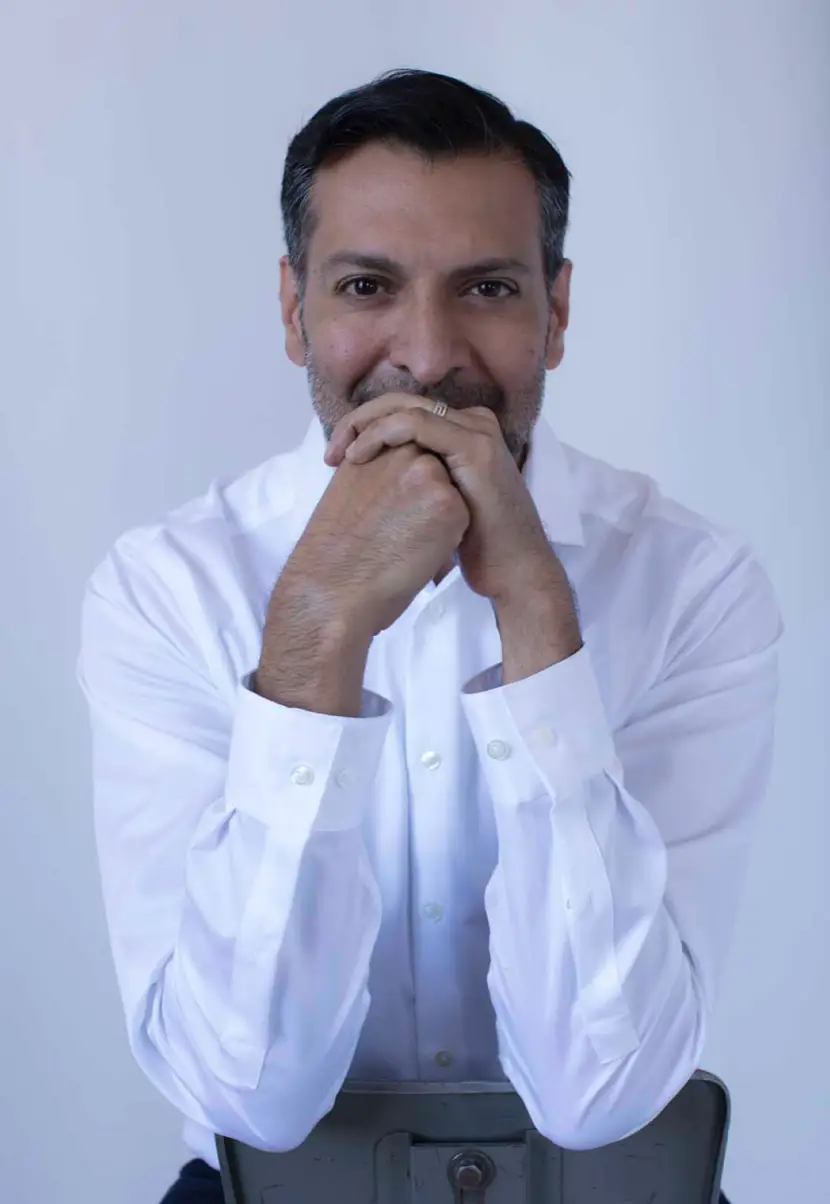
I had the privilege of sitting down with longtime friend and Hollywood veteran, Riaz Patel. Trained in psychology at UPenn and raised in a world where he was rarely the "norm," Riaz has built a career around authentic transformation - first on TV, and now live onstage. In this episode, we dive into:
His creative process behind TV hits like How to Look Good Naked
Why "authentic transformation" matters more now than ever
The EPIC system and how it underpins his live experience, ConnectEffect
Practical tips on how listening can build real connection in business, parenting, and leadership
Key Takeaways
Authentic change only sticks when it’s real—not just for the camera.
Connection over screens equals deeper trust and collaboration.
EPIC structure (Equalize, Personalize, Investigate, Collaborate) fosters conversation that matters.
Listening is a superpower; it builds bridges across divides.
Small experiments—like stepping out with strangers—can reboot how you see yourself and others.
Relevant Links
ConnectEffect website & info: https://connecteffect.us/
LinkedIn profile: Riaz Patel, Executive Producer/Director
EPIC system overview on ConnectEffect website
Unedited Transcript
Avish
Hello, Riaz, and welcome to the podcast. How are you?
Riaz
Hello, my old friend. How are you?
Avish
I'm very good old. Old friend, indeed. I was gonna say you're the oldest friend I have on this podcast, but I'd have one person I knew in college before you, so you're close.
Riaz
Shelve that episode. Shelve it.
Avish
I will. Well, it's already published. It was like the third episode I did.
Riaz
So most people fine.
Avish
A very long way doing improv comedy together in college. You're my first college impro advisor on the podcast.
Riaz
So there we go.
Avish
So welcome. You are also perhaps the most fascinating person I know just in terms of your path and the things you're up to and have done. So to bring people up to speed who haven't been following you on social media, could you just give us the one minute sort of Riaz, update who you are, what you do, what you're up to.
Riaz
Sure. I am a producer and director. I've spent most of my career in Hollywood creating shows for almost every cable network. And what I found, my path is very specific. That I found was trained in psychology, studied psychology when we were together, is this path of creating authentically transformative shows for real people. So whether it's, you know, makeover shows or shows with super nanny families in crisis, anything where there is a positive transformation, that's what my jam is. That's what I do.
And it is incredibly fulfilling because you really do change people. And my. If you ask anyone who's been on the show with me on my staff, they would say, what is the thing Riyaz has before every shoot? And it's if they change for camera, we have failed. If they change authentically forever, the cameras will document it. That's the show that we're not doing it for camera. Like, I hate to tell you, a lot of reality is for camera.
That's not what we have ever done. And so I do authentic transformation in on screen, and now more so in the real world.
Avish
So that's fascinating because the moment you said, like, oh, you know, I do. I work in Hollywood and I've done these, like, you know, nanny shows or makeover shows, but it's all about authenticity. I'm like, wait a second. Because I was actually on not a transmission. I was on the TLC show, A Dating Story.
Riaz
Oh, I used to love that show.
Avish
I was on an episode of that, and it was very wholesome. I did it because I knew it was like a nice, wholesome show. But even that they edited after the fact, in a way, to make it more dramatic, that made me look bad. Not terrible, but just like it made it look like I was late for the date. And people afterwards, oh, I can't believe you didn't even make it on time for your date. I'm like, I was waiting for an hour and a half.
Riaz
Yeah.
Avish
For her. But your approach then. I love this line, though, that, like, if it's just for the camera, you did something wrong.
Riaz
Yeah.
Avish
And so let's talk a little about this. Completely different than what I was going to talk about, but I'm. You know, this takes on a life, its own. So tell me, how do you do that? Because obviously you have to balance the story, the performance, the production. Like.
Riaz
Yeah.
Avish
What is your approach, then, in making sure it stays authentic?
Riaz
It's almost like we're creating this social experiment, you know, really, really, really specific one. And I think what I love about it, I've always enjoyed it, is I never know if it's going to work. Like, even now with work I do with Connect Effect, which we can talk about. I never know if it's going to work because it is authentic. I want an authentic transformation. I want people to see themselves, the world, their environment differently. And so we build it.
And the producers and I are in the room beforehand and we're like, okay, what could we do here? How could we get her to see this? And we're all always huddled in Video Village, and we're like, fingers crossed that she. We call it make the turn or he makes the turn, means they see something they didn't see. I'll give you an example of this. We had a show called how to Look Good Naked. Very saucy title on Lifetime.
I remember that.
Avish
Yeah, I don't think I saw that.
Riaz
I remember that billboards and Times Square was a big, big launch for a lifetime. And so it was the show that essentially was about women embodied dysmorphia, how women don't see themselves accurately. And so we had this mother, daughter come in season two, I think it was, and the daughter was probably 20, and she had already been hospitalized for anorexia. So we were dealing with a real problem here. And the mother said, look, she'd seen season one. She knew that we didn't mess with people. And she's like, maybe this is it.
Maybe this is the thing that gets her to see things differently. So we knew that this woman did not see her body correctly.
We knew that. And so we devised this plan exactly how it did. We said, okay, let's take a photo of her months in advance. So we said to her, you know, you don't know what size you are. That's kind of the problem is you sort of don't know. So we're gonna have a photographer take a photo of you in your undergarments that will send a stylist so they can pull clothes for you because, you know, clothes are going to come in the show. And then what we did with the photo is we removed the head, made it life size, changed the skin color, added tattoos, and changed the undergarments to a bathing suit, different color.
And then we lined it up with four other headless torsos that were life size. And so she comes into the studio with the host, Carson Kressley, and again, we're all in video village, like, please, please, please let this work. And she looks at the bodies and Carson says, which one are you? And she points to one. And we're like, that's obviously not you.
That's a size 12. You're a size 10. Like, or size 12. There's a big difference. You're size 8. So then this is when we're finger crossed, like, what do you like about these bodies? And she looks at them and she points to her own, doesn't know it's hers.
She's like, I like that. I like the proportions.
He's like, why? I like the thin waist, I like the rounder hips. And we're like, interesting. And so on camera, he pulls off the film of the Photoshop to reveal what it was like originally. And then we flip the head up and we're like, that's you. And so she sits there completely silent. And then a tear comes, another tear, and her mind is blown.
We were able to show her in a very specific way. You don't see yourself accurately. And so once she realized that irrefutably, she was on board.
She's like, maybe I don't. And I know because I kept in touch with her for years. She was never the same again. So it is this sort of social experiment, which is why my research in psychology was so useful, that we built and we hope it works. And I've done this hundreds of times and it always works because we've built it so clearly. And so that is a very thrilling part of what I do, is the authentic reaction. I'm always watching it, but it is a tightrope walk.
Avish
What's. That's fascinating and it's a great behind the scenes peak because I think a lot of us would watch Something like that, and assume it was sort of mocked up or, you know, but it's great to hear, like, know you take that chance. And you've mentioned, like, three things that set off bells in my head. I'll probably forget as we talk about one. I'll forget what the others are.
Riaz
Let me just jump in your second. The only thing I want to say is, I think, and especially now, in a world of so many edits, I think audiences know, even if they can't explain it, they know instinctively what's authentic. And so this little show of ours went on, had great ratings. And I think that now when people see the screen, they're very aware, they're very savvy. Like, that feels produced, that feels forced, that feels like an edit. Whereas the stuff that we're doing and I've always done, an audience can't explain it, but they know something real is happening and that. That visceral.
I believe this authenticity. In the beginning of reality, everyone was like, okay, great. This must be the truth. And now everyone knows, like, it's all produced. It's all an edit. So I think in this new era of so many edits on so many screens, authenticity has real value. Anyway, just wanted, like, because I think it's changed since I started.
Now authenticity really has value. You know, podcasts, it's a real conversation rather than sound bites.
Avish
Yeah. And I've talked with a few people about this, that with podcasting, both as a guest and as a host, it's about an authentic conversation. But sometimes, and you've. You've done a bunch of podcasts, you know, sometimes you get on there and maybe they ask you to submit a list of talking points in advance, and you can tell the host is just like, check, check, check. And sometimes you'll answer question three. Like, it'll be question three, you'll answer question four, but because on the checklist, they'll still ask you question four. You're like, you're not even.
Riaz
You're not really listening. You're waiting to speak. That is the biggest problem, I think, in today's world is people are not truly listening. They're waiting to speak.
And that's exactly it.
Avish
And we're going to get it. Because I think that is a big part of the connect effect. And I want to get into that in a minute. But first I want to circle back on this. Let's talk about authenticity for a minute. Because this is, in a slight variation is sort of one of the things I talk about is this idea that I Got from improv and that I apply about knowing your core, which is that understanding what makes you, you and you special and then understand how to leverage that I think is so important.
Riaz
Yes.
Avish
And yet, which is kind of what happened here.
Riaz
Right.
Avish
This person didn't even see themselves. And I think that's obviously a body, physical thing, but I think from a passion, from an interest, from a. What do I bring to the table? I think so many of us are conditioned to not even look at that. And I'm curious. In all your work with all these different people, and you're probably one of the people I would point to is like, look, there's someone who obviously we stumble and figure our way. But, like, right from college and after graduation, you were already at least pursuing and kind of continue.
So what do you see out in the world in terms of, like, authenticity and. And how. And why people sort of ignore it, miss it, overlook it.
Riaz
I think for our age, and not very, you know, you and I are Gen X. I think it was maybe having an instinct of who you are and then the circumstances of your life let you lean into it or not. You knew me at a time in college, our era where people were not overtly gay. I don't think anyone was surprised, but it definitely was not something that was out in the open. And so I knew who I authentically was, but I definitely was trying to cover it and hide it, you know, same thing throughout my life with my ethnicity, you know, being an immigrant, all that stuff, you know. So I think for our generation, there was a little bit more of a real sense of internal who you are, but a lot of external pressures to either lean into it or not. Expectations of family, you know, you can't do entertainment.
You must be a doctor. I think as we ended up having more and more time on screens, you know, millennials obviously are a precipice of this. And now we have Gen Z, where so much stuff is coming from the outside in. I think it is harder to know who you are authentically because any spare second you have, your eyes drift down to your screen where you're taking all this information, whether it's, you know, people who work out or lifestyles and all from the outside in. And there's little time in the silence for you, who you really are, to bubble up to the surface, which I think, you know, growing up, I spent a lot of time, yes, watching tv, but a lot of times my room, like, it was just more isolating. So the voices inside of you, you. You could hear a Little bit more.
And what you did with them was a second story. Now I think it's. People are not sure who they authentically are. They are expressing it more. They're leaning into, I'm going to be me, I'm going to be this.
I'm going to be loud. I'm going to use my platform. But who they actually are is now a bit trickier because they're getting so much stimulation from the outside in. So it's almost a reverse of the problem. Like now no one is afraid to come out as gay. Well, sorry, there are, but it's much more acceptable. And so.
Avish
But.
Riaz
But I know people who thought they were, but they're not, or thought they were trans, but they're not. And some are like, I think there's just so much information, specifically post Covid, which is coming from the outside in that it's harder to know that authentic voice. And I always say any great idea I've ever had, any big decision in my life came from silence. It wasn't. I'm going to imitate that.
It was, what if this could be true? What if. What if I could create this show? And that is so important as we navigate an authentic life is what is who you. What you said, who are you authentically, you know, when no one's watching, the minutes before you fall asleep, who are you? And from that, that sort of leaning in and those whispers, I think that's where authenticity comes from. And then it's the second step of can you fight the fight to be authentic?
You know, against the people and expectations and outside world and fear. That's. That's the second part. That's hard.
Avish
Right? And you would have no experience with that.
So we'll get. I'll get to that in a minute. But I love what you're saying about the. I love it and I hate it because we talk about the younger generations and our kids and the screens and the distraction and constantly seeing, like, everyone's highlights, comparing that to your real life. But even at my age, our age, I'm just learning some of this now.
Like, just, you know, I've. I don't know if I mastered well in college or not, but I've always been a terrible procrastinator. Like, I have no work ethic at all. My talent is always far exceeded my work ethic, and it's just gotten worse and worse. And I think it's because the. The presence of stimulation, like screens, like, and the dopamine hits, and I've just sort of really Started digging in this last year or two, and now I'm seeing what you're talking about, which is when I can use an Internet blocker and block the apps on my phone, and when I can allow myself to be bored, I feel less anxious. I feel less like I'm falling behind or stressed out and more creative.
And now, as. As we're both parents, like, trying to figure out how do I navigate with that with my kids? And, you know, we don't give them a lot of screen time, but they get some and it's less than their friends, and they're complaining about that and whatnot. So I totally agree with what you're saying, and I wish it wasn't true because it's a giant pain in the ass to live that way.
Riaz
And it is. I mean, I would say, you know, definitely when we were growing up, it wasn't there. And if it was, it was communal. Like, we all watched three networks. And so the shared experience of, you know, who shot Junior on Dallas was a national connect connection. I, you know, I've often. I work with a lot of millennials and I work with a lot of Gen Z, because in Hollywood, we're always sort of hiring people and bringing them up, and I don't really fault them for the situations that they're in.
Like, I think it's very, very hard to have a life and a world and a story of who you are take place partly in the real world and partly in the screen world. And I think the screens are not going to go anywhere. It's just then finding that balance, which is hard. It would be so much easier. It's funny, we went to a restaurant yesterday. I met with my mom's birthday, and my kids looked around and they're like, every other kid is on the screen. And I'm trying to have them realize.
I taught them when they were very young. You're really young when they're brushing their teeth. I said, the same way you brush your teeth, we can't let you have too much candy because you'll have cavities, big holes in your teeth. That's why you brush your teeth.
The same thing happens. Too much screen time. You get big cavity holes in your brain. If you X ray, you can see the change. So they're a little bit more wary of what screens can do.
But, you know, as. As they spend more time on games, it's hard to pull them away, and I don't want to. The screens are not going anywhere. They're not.
They're not Just bad. They're great. But it's knowing what they are and knowing the kids.
Avish
Like, that's how they socialize. Even if, like, we don't really let them do the chat thing. Even without that, though, like. Like when we were young, you know, you go to school and you talk about what happened on.
Riaz
Yeah.
Avish
Dallas or Three's Company or whatever show. Oh, did you see that? And now it's like, oh, I was playing. They're gonna talk about games. My son at times feels left out of his friend group at school because, oh, they're all playing.
Riaz
Yeah, Fortnite.
Avish
And you don't let me, like, yeah, well, that sucks for you. And we get it, like image.
Riaz
And I don't say that, but yeah, yeah. No, but I think you have. And it's funny, same thing. We don't have a game station here. But when they go to other people's houses, they come back and very cheapishly like, we just played Minecraft.
I'm like, that's okay. Like, the rules of other houses apply.
Make good decisions. But I don't want us to be those crazies who. And now I'm worried if it's like, whose parents were like, you can't have sugar. And I'm like, we had sugary cereal. Like, there's a way to do it, you know, in moderation. It's hard, but anything, you know, that's too easy, too sweet, too simulating is hard to resist.
Avish
Yeah. And we use that as a consequence. Like, you know, we don't just punish, like, oh, you lost video games this week. But it's like, look, you're acting really impulsive and hyper now.
Riaz
Yeah.
Avish
If you keep that up, it means you can't handle the stimulation of video games. You're going to have to be off video games for a little bit. Little bit. So, yeah, we try to pay attention. So. All right, well, before we move on, let's just say that you were putting together a new show, a new transformation show and was all about how to help people sort of reconnect with their authentic selves. What is the kind of first.
What's the first episode about? What's that first you get that person there on day one. What's the first thing you would have them do?
Riaz
You know, it's really interesting, I think, you know, and again, because I'm so consumed with Connect effect on a day to day basis, one of the think the most powerful ways to know who you are now, not who you were, is strangers. You know, I think we get Stuck in patterns with our significant other, with our siblings. You always this. You did this. It's funny. We're in an epidemic of loneliness. Everyone talks about it, but we all know people.
But for some reason, they're not feeling some need. And I think that need is to be reflected who you are now, not who you were 10 years ago or five years ago. So I find whenever I'm able to connect strangers and a stranger will say to someone, you know, you're really, really, like, you're a great listener. And they're like, am I? I am. Because no one ever says that. Like, I think that, you know, being able to.
For strangers to. And again, part of that, the trick of that is the connection. But if you can have strangers reflect what they're seeing and feeling in you right now, I think that is an incredible gauge of who you are now. Because so much of life is an edit. What we tell ourselves, you know, what we remember. Remember the trauma of walking into the cafeteria in middle school, which I've not had, you know, 30 years, but it still bothers me in my edit. I hold that front and center.
I think we get stuck in patterns of seeing ourselves a certain way. And I think other people around us who grew up with us see us as a way that we may not be right now. So I think to figure out who you are now, I find that having conversations with strangers, people you don't know or don't know well, is a really good mirror, if you will, of who you are now. And I think that's so needed now because I think, again, with so much stimulation coming from outside, I think people are very lost. And I think to just sit in your thoughts now feels like it leads to, like, this overwhelming sense of anxious. I don't know. I'm not this. I'm not. I'm not.
I'm less than. Whereas if you can sit with a few people that you don't know can reflect who you are now, I think that's a really powerful tool. In an era of screens, in an era where everything we do is recorded forever, in an era of injustice collecting, to be able to have fresh insight into you, I think is a very, very powerful tool.
Avish
Well, that's fascinating. I think you're getting into kind of what you do with the connect effect and want to get to that. But two thoughts popped in my head. I want to share one is what you just said is so interesting because having done a lot of books about branding marketing or read a lot of books on branding marketing exercises, Your unique ability, your zone of genius. All the advice is the exact opposite. It's all, go reach out to like the five or ten people you know the most and ask them, what do I do the best? What do you.
I think there's validity in that. But it's so interesting that you say that. It's such a different perspective. And the reason I think that's very possibly true is thinking about my own life. I realized, like going through high school into college, there are times I sort of reinvented myself. Not consciously, but it was, you know, I started in third grade in my school and then in about 10th grade I joined the Indian community, which was not in my school. And I was so much more humorous, so much more outgoing with that group because it was like a fresh start.
Riaz
Yeah.
Avish
And then when I went to college, I got even more human. I think I really stepped. Like, I don't think I would have done improv as a 9th grader, but I think the transformation I had with a new group of friends in the Indian community in high school, and then again, just hanging out with friends in college made me more authentic because each time it was a new group of people, I could be more myself. No expectations from anyone else.
Riaz
No expectations, yes. No expectations, no baggage, no history. And again, it's not either or. You know, having long standing relationships is great, but I think we all need a litmus test of who we are now. And I think as you said, you walk into new rooms and people react to you differently because you have changed. You know, the ninth grade, you was different than the freshman year, you. I think that's an important part of the arsenal that often gets overlooked.
And I think that's why people feel so stuck often is because they feel that people see them a certain way. They remember their failures, they remember their inadequacies from years ago. And again, long standing relationships are great, but I do think there is a new sort of power in finding people who just see you as you are now and react to you now. I remember very similarly, like I remember going to pre college, you know, at Penn when I was in 11th grade of high school. And I, you know, I definitely was. Knew a lot of people in high school and got along, but I was surprised when I got there how much like I was. Like, I was, I was leading things in a way that I hadn't in my high school. And I really felt like, oh, wow, this is what it feels like to really have a vision and be like, okay, we're going to do this.
As opposed to in high school where I think there were some friendships and dynamics and she's popular in this, that I didn't, I didn't have that fearlessness. And so I do think those new situations always inform who we are and specifically what potential we have that has not been unleashed.
Avish
Well, this is a nice transition, I think, into Connect Effect because you sort of force this through the structure of strangers interacting. So let's, let's talk about that because that's kind of one of the big things you're working on now.
And it's pretty cool. So let's. For people listening, could you describe what is the Connect effect?
Riaz
Sure. So Connect effect is a 53 minute live, in person entertainment experience. And what it does in 53 minutes is it takes an audience of strangers across any ages, any background, any race, any beliefs, any side of any divide. And in 53 minutes, it connects them incredibly deeply to one another. The Connect effect itself, literally, what is the Connect effect is if you can create the right connection, it leads to open and honest conversation, which is the foundation of community. That is the connect effect. Connection, conversation, community.
What we have perfected over seven years of development is the connection point. And we have done it on the coast, blue collar, white collar, rural, urban, across political divides, on college campuses with the elderly, the elderly and college students. And it works beautifully.
It took many, many years. What it does is it harnesses the power that comes with entertainment. And in entertainment, people relinquish their ego. Like, you don't go to a play and you don't go to a movie ready to fight with the screen. If it's a workshop, a seminar, a lot of that is information based. And we are in an era, an information age, where we are bombarded with information. And so much of that information stays in the brain and the ego.
It doesn't permeate, it doesn't create a shift. Entertainment does that. I always say the same. What I'm able to do in Connect effects is the same things that someone would do in a workshop. But the information is not taught, it's caught. That's what entertainment does. And so it allows me to create an incredible shift in 53 minutes.
And it's unbelievably cinematic. And the sound mix is incredibly robust, because it is. And even if we do it at a conference or a college, the lights get dimmed to at 75% because I don't want people walking in and being like, oh, this is a classroom. Like, no, no, no, this is a different thing. We have Data on its effectiveness from mental health departments. One of the largest healthcare systems in America, Essential Health, brought us in for the loneliness epidemic. They were shocked by what we were able to do.
And so that. And it comes from my. My history in Hollywood of creating authentic changes. Why were we able to take this girl who had been in the hospital for anorexia and show her something that she'd never been able. Her family doctors were not able to sort of teach her was because we immersed her in this experience, and something shifted. And so that unbelievable transformative power of entertainment is what we use. And it took many, many years to develop.
I mean, many years. We got it wrong. And we're like, okay, that didn't work. Why? And it just became this personal obsession that any time I've ever humanized myself, whether it's, you know, being gay or Muslim or an immigrant or now, honestly, a gay dad, like, that's. That's. The world of parenting is run by moms.
You walk in like, oh, where's mom? And, like, we don't have one. And it's like, needle scratch. Like, oh, oh. Like, is. Anytime I've humanized myself, and what is different for me than the other person I'm talking to is through conversation. You take that off the table.
There is no other way. You can't post your way to understanding. You can't text or type your way to understanding. It has to be through conversation. And in 2016, that beginning where people started saying, if you don't believe what I believe, I unfriend you. I don't want to ever hear from you.
And I was like, oh, that's. That's not going to. That's not good. That's not going to lead anywhere good. If we stop talking, and not only will it not lead to anywhere good, we won't solve anything. Because solutions to real world problems are never either A or B.
There's some combination of both. And it seems like all we ever do is argue about the problem back and forth, and we don't actually ever solve it. So it's not just a way. The fire alarm just went off.
Avish
All right.
Riaz
Did you evacuate? No, I don't think so. It's almost like we're in an improv and it's like, beep, the bell went off. Yeah. No, it's. It's. It's incredibly powerful.
I'm very proud of it, as every time I do it. And this. This month, I've done it in four different cities. I'm always nervous because I want an Authentic shift.
And thankfully it actually always works. And. And that's very gratifying.
Avish
So can you share a little bit about what the experience is like? I know you get people having conversations and stuff, but it's just from the clips I've seen.
But that's so. And I didn't. From what the bits I saw, I didn't get the entertainment aspect. So I'm curious how you weave all that together.
Riaz
It starts. It starts at the door because we find that someone's experience of something will start where they sit, who they sit with. So at the door you're touch a touchscreen and it assigns you one of four colors, primary colors, red, blue, yellow, white. Then you are sent to an interconnector with that color hat or scarf on and they start introducing you. Eventually the audience, whether it's 50 people or 450 people, are seat in pods of four with people they do not know or do not know. Well, we always ensure that. And so that's the beginning of the experience, is that everyone in the room is equalized.
No one is sitting with people they know. And some people are not. Everyone is sitting. And so the beginning of the experience takes place in the screen world.
There's always a large screen. And essentially the experience goes back and forth between the screen world and the real world, means the people in the room and over the course of the 50s that we're pulling them apart. Because I think the greatest problem we're having in connecting is we think it's the same thing that people will sit at home looking at the screen and feel hopeless, feel bad about themselves, feel like everyone's doing better. But everything on that screen is an edit. Everything. And behind every edit is always an intention, which is in this day and age, more likes. That's true of you, me, cnn, Fox.
It's just more likes. And so the first third of the experience is trying to break your reliance on the screen world. And then the second two thirds of the real world, who are the people in the room? Who are the people you're sitting with? There's an underlying system to it that I developed years ago called Epic. Forbes called it a game changer. It's been published in several books.
Someone just sent me a book where they cited it at one of the chapters. And it's equalization, personalization, investigation and collaboration. And it's just a structure. And that's exactly the order we go through. At the very top of it, we're equalizing the audience. You're all sitting with strangers. Then we do this sort of one immersive thing where they see all the similarities they have with people in the room that they would never see normally, they would never, never notice, because we can only see the outside. Then personalization.
In a world of infinite edits, the only truth you know for certain is the truth of your own life. Everything else is an edit. You know, what edits are you seeing? What edits are you not seeing? So, really talking, who are you?
Where did you come from? You know, what are the events of your life that shaped who you are? What did you experience? What did you see your parents go through? And then investigation is the very key. It's the difference between listening and waiting to speak, that we're very clear whose turn it is in the pod to speak, with visuals on the screen. That and the other three just listen.
And I'm doing that because I want people to not wait to speak, because that's what we're doing, whether we're. Whether we want to, like, we think we're important and I want to impress you, or we're insecure and I just don't want to say anything wrong. I'm in my head, which means I'm not listening to you. Which, of course is the foundation of improv, is I don't know what the next moment is unless I listen to you. We literally don't have a script, so I have to listen to you and react. And then collaboration, the greatest conversations, relationships are collaborative. And so there's.
At the end, you really have this sort of sense of collaboration. So that's the structure. But it goes from the screen world to the real world. And it was very important to me that it be under an hour, because I think people's. I think time is the most valuable commodity we have. And that was about. It was.
It was 60 Minutes. And then I realized no one arrives to anything on time. It's usually like five, six minutes for people still. And I'm like, oh, I don't want to always start behind the clock. You know, I got to make up time. So it's 53 minutes so that we don't have to start till 7, 8 after, and we'll still end on time because no one ever arrives on time. So it's very respectful of the efficiency that's needed with time and busyness, because that is.
I mean, how much time do you spend, scheduling? How much time do we spend, you know, going through apps and LinkedIn posts and texts?
And it's just. No one ever had. No one's Ever caught up. And so I think it's 53 minutes because no one has spare time. So if I can. If I can slot it in to what would have been a lunch or a meeting, then we've accomplished something that someone, if it's two, three hours, be like, I don't have the time. So that's why it's so, so quick.
Avish
Oh, I love that. I was wondering about the 53 minutes number. So that makes.
Riaz
Yeah, yeah. There's always a reason. Like, you know, we were talking about it with someone and I'm like, I think the thing about being a producer and director in Hollywood is that the stakes are really high in terms of money and time. But you have to know who your audience is. You know, from the moment I pitch a show, I need to know who that. Who is that person who's turning, turning on the tv, sitting in front of their screen, who are they? Why are they turning to it?
And so everything comes from there. And so to me, my audience is a person who feels connecting is really hard. It's really uncomfortable. I don't know how to do it. I'm afraid of it spiraling. How can it just be easy and effortless and ideally enjoyable? Because real connection is fun.
We've just forgotten that, like when we used to sit as college students and those nights that just would go on to like 1, 2 in the morning and then eventually a trip to 7 11. That's the best parts, you know, those are where the greatest things come from. And so I think people so scheduled, so reticent, so much time in their homes, they're not having those moments that really blow your mind to what the world is and seeing things differently. And so it really is a tool to get people to really open up to one another.
Avish
And I, like, I went through your epic before, before we spoke and I kind of made some notes and you know, you just kind of quickly mentioned collaboration, which work together. But what I like is you. You refer to collaboration under the umbrella of what neither of us know.
Riaz
Correct.
Avish
Like personalizations, what. What do I know? Investigations. Let me learn what you know. But I never thought about that before. But like, first we're going to collaborate because we want to talk about what are the things we don't know. And let's work together to, to figure that out.
Riaz
And that's improv. That's what you and I would do. Like you and I, there's a scene, we almost always start off freeze, you know, where. Where, you know, you have two people on stage, the Others are in a line and then you clap your hand and everyone freezes and you go tap someone out. We have no idea where that's going to go because the person doesn't know. And so to me, collaboration comes when you've gained some trust, which obviously, you know, improv, the greatest improv, the. Yes. And works when you trust.
You know, I think one of the reasons why collaboration came last is so often people will go into conversations talking about issues and I'm like, you don't have any connection with each other. Like, you really shouldn't be discussing the thing that you don't have in common first. And so the whole idea of connect effect is like, yes, we can talk about guns, yes, we can talk about immigration, yes, we can. But only after I've connected you, that you respect each other, you see each other, you see that each other's perspective is valid. And then when you say, I like this person, I have a lot in common that I didn't know. Now we can collaborate. And if you tell me who you voted for, I'm not jumping to dismiss you because we already have some emotional history with one another.
So that collaboration comes at the end. And it's almost like when we did improv and improv in general. It's like there was so much rehearsal and time, like just not on stage bonding. Because we knew when we would go out there, the name of our group was without a net. We literally were going without a net. So the only person to catch you is the other person. And so that trust, that collaboration came after we'd rehearsed and we trusted and we liked each other and we knew, like, no one's going to go out there and try to stick it just for the joke themselves.
And I think when those people showed up, we knew it very quickly, like, oh, you're not someone I can trust because you're going to go for the joke on your own, you know, and that's definitely, you know, we're in an era where people are just sort of posting or stating and they're not doing it to have a conversation and collaborate, they're doing it to just about. It's narcissistic about themselves. And so the collaboration we usually have to build the trust and the. And the sense that we have so much in common to get to that.
Avish
Well, let's talk a little bit about that because one of the most interesting, I think, common ground collaboration stories that I've seen, which I was sort of blown away when I saw this a few years ago, on your social media is you are gay, Muslim, Pakistani immigrant, and then you somehow became buddies with and formed a partnership with Glenn Beck, who most of us would say is the not only the opposite of that, but for a while was like the torch bearer for all people who are opposite that. So, number one, I'd love to hear just how that came about. And number two, just share like it's one of those, like, well, if I can do it with him. So I just want to hear about that because I still, I never got story. It was so like, wow, that's crazy.
Riaz
So very, very specific story. So we, my family and I were attending a Pakistani wedding in Orlando and my daughter was, I want to say 12 weeks at the time, so she was in that swaddle that you carry. And so we were walking down the streets of Orlando wearing Pakistani attire, wearing kurta pajama. And it was the night after the morning after the shooting at the Pulse nightclub, and the Pulse nightclub was about not less than a mile away. And so there was this reaction that has happened so often in my life of just this trepidation. Like you can see these people with Muslim attire walking. And there was just some reactions of looks.
And I'm like, I went through this, you know, in the Iran hostage crisis in 1979. I went through this after 9, 11, you know, and I was like, I can't keep doing this. But at that point, I wasn't powerless. You know, the thing about people's reactions to what they don't know is more often than not they come from the screen. You know, it used to be the news and now it's, of course, everything news amplified by social media. And so I got back to LA and I remember thinking on the flight with my daughter, like, I don't have to just roll over anymore. And so I sat with my agents.
I was, it was, I think, ICM at the time. And I said, who do we know in conservative media? Because they never do a three dimensional portrayal of who Muslims are, who gay people are. It's always sort of like, you're two dimensional. And they said, I think at the time they represented Tommy Lahren, who was this sort of young, vocal woman who was making waves at the time. And so she and I had this live debate on Zoom and I, I did me like, I just talked to her. I didn't try to win, but.
But I sort of debunked a lot of the thinking that I thought was, was a little bit under nuanced. Glenn Beck's producer saw that and said, we'd love to have him on Glenn. And I reached out and said, I would love that, but he can't have earpieces in his ear. It has to be an authentic conversation. There are no talking points. And so we went back and forth about this, and I said, I'll fly myself. Like, you know, I'm not beholden to anyone.
Generally, when I start a collaboration, even with very powerful, wealthy people, I fly myself because I'm not under your thumb if I fly myself. And I remember being so nauseous that morning, and I went on set, and There are about 100 crew, and I shook his hand, and we sat in these two armchairs and we just talked. And I looked at him and to me. So that's how he ended up getting there. To me, the more important than Glenn, Although Glenn absolutely shifted the way I see some things that at that time, I Knew I was 100% right, and I believed he and his side were a hundred percent wrong. And that was not true, that there were important things, important things that I was not aware of remotely. Now I think we're more aware of, like, there are too many streams of information.
This is 2016. And I was like, wait, what are you talking about? And then I would research.
I'm like, I've never heard that. I've never heard that scandal. I've never heard that. And it was very, very illuminating to me. More important than Glenn was his audience.
Again, producer, director. To me, it's the audience. And so it wasn't even Glenn so much as the people that listened to him that never had a chance to hear an authentic conversation with someone that was often talked about. We did that.
It went incredibly well. The ratings were very high. And from that, we ended up doing about 20 shows. Every show I would do, Glenn, to his credit, would say, announce, Riaz is on set. He is directing. And so various ways, I would bring someone on the phone who was the most progressive person I knew in Seattle, and Glenn, and he would have a conversation about, you know, what is if, what is effective ways of helping people out of poverty. And I remember that conversation, my friend from high school was like, you know, capitalism is a real great incentive.
And Glenn's like, right. You know, and it was just like the truth was somewhere in the middle.
Avish
Yeah.
Riaz
What's interesting is the ratings were always high. I wrote an op ed when. When Bush won Bush the first time. And it was the most viewed article they had ever, ever put out, which means the audience wanted these conversations. What ended up Happening is the advertising side was like.
Avish
You mean when Trump won the first time?
Riaz
This was correct. Sorry, sorry, Trump. The first. No, 2016.
Avish
You meant Trump.
Riaz
No, 2016 was who? Trump. Oh, right, right. Trump. Sorry, Trump. That's right.
Avish
You said Bush.
Riaz
I did say Bush because I just jumped in my head from 2020 to 2001. Correct, Trump. And I wrote this op ed, and it was. It was one of the most. The most viewed piece of writing that had ever been on, put out by them. Eventually, advertising came in, and this is sort of one of the reasons why Hollywood is struggling. And they're like, we're glad you do this thing, but the gay Muslim guy doesn't help us sell gun safes. Safes. He doesn't help us sell.
Our advertisers want a certain type of programming. And that's what Hollywood started doing, which is why streamers like Netflix really took over, because they were not beholden to the advertisers. And so although the work was needed, although it was nuanced, although none of our shows were like, you bastard. It was really stuff that people should see. The advertising side was like, nope, we don't want any more of him because he's not helping us move the products that we have. And that's true of Hollywood. A lot of people don't know this, but when I pitch a show and we shoot it and we do rough cut one and rough cut two and fine cut and lock cut, the locked cut, which means I've pretty much gotten the show the way I want to, the network is pretty much signed off.
The locked cut goes to legal. No one knows this. And legal business affairs has final say. And so if there's something that could be perceived as, oh, God, controversial, legal will take it out. And so they're the final say, the advertisers, the legal. And so that's why a lot of Hollywood programming has no teeth, you know, because it's been vetted by so many people. Whereas Netflix is like, we're subscription based.
We're not beholden to advertisers. So although the collaboration with Glenn was, I thought, really good for our country as it became more polarized and we certainly found a lot of common ground in things that we never thought we would. And I know I've changed his perception of the world forever, and he has changed my perception of the world forever. It was eventually the advertising side was like, no, the same thing in Hollywood. Anytime I pitch shows of, like, great collaboration, they're like, you know, what's. What's the hook, what's the twist?
And I'm always like, the world is burning. Can you actually smell it? Can you smell the world burning?
Do we need more conflict? They just can't get out of their way. And so, you know, that, that was the story of Glenn, which was this wonderful experience of really doing connected programming. But eventually, like so many times in Hollywood, they're like, yeah, we want the conflict. Yeah, we want, we want the, we want the bitch slapping.
Avish
Yeah. And I think that's, you know, we have a whole separate conversation about capitalism and its pros and its cons and its benefits and its drawbacks. I think that's like, yeah, it has a tremendous power, like you said, your other progressive friend, you know, was talking with Glenn about. But at the same time, when it all comes back to it, which is probably, you know, we're talking, we talk about social media and seeing that. That's probably why you also start to see the rise of the influencer, right? Where the influencer would just go out and build an audience or saying whatever the hell they wanted to say.
And their people found them. Right. And then the advertisers came instead of the reverse.
Riaz
Correct. The creator based economy is what decimated Hollywood. That, you know, it's such a strange thing that I would film an entire series, edit it, deliver it before any episode ever aired. And so on episode one, if we're watching the live ratings or like, okay, oh, that section dipped. We could never do anything. We'd already edited and finished it. The creator economy, which puts it out, allows you to adapt.
Oh, my audience likes this. Which makes sense. There's a real adaptivity. It's interesting.
You know, Mr. Beast, everyone knows, is probably the, the highest revenue generating creator. He started a Hollywood studio called Night Studios. A very good friend of mine who ran Fox went to go run it and after a year and a half, he shut it down. He was like, what is going on? Like, I'm being given notes before it airs. I mean, taken through this antiquated process when on their best day, their audience is one, one sliver of what I get.
And so it was even interesting that he was like, okay, you know, I'm huge in the creator economy. Let me now engage in, you know, traditional television. You know, big game show, biggest prize ever. And they just shut down the studio. They're like, this doesn't make any sense, you know, that you're still running around in a building thinking, you know, an audience that he's like, I already know my audience. I know them incredibly well, so the creator economy has really shifted everything. And some of it's good because Hollywood was very, very insular and there used to be like a handful of gatekeepers and if you knew them, great.
If you didn't ever come across them, you never had a chance. And now anyone can have a chance.
Avish
Well, it's funny, and this is very unrelated on a much smaller scale, I'm thinking about this. I Finally, after 45 years of thinking about it, finally finish a draft of a novel. And so now I'm in the editing phase, which is also very slow, but you know, already starting to think about, okay, when this gets to a point, which route do I want to go? Do I want to publish or self publish? And you know, I2 nonfiction books for my speaking business. Both of those are self published. So I understand how that world works, you know, but there's the prestige and the mindset and the distribution potential.
But exactly to your point, I'm like, obviously they're experts there and they can help. But also, is there going to be this like old school mentality that's going to completely change, like pros and cons, right? And 20 years ago it was a no brainer. Self publishing was like, no, no, no. And. But now the whole world is shifting and if I build my own audience and following, do I even need the traditional publisher?
Riaz
It's an excellent question. And I would say having had a friend from Penn who just put out a book with a publisher, when it comes to promotion, she's not only hustling out there, but she's making most of the contacts and interviews herself. You know, it's funny, the, the joy of getting a show Greenlit, you know, 10 years ago was like, like how to look at naked was that when it launched? Like there was a billboard in Times Square. They had massive media buys, weird magazines. And I was like, oh, wow, we're going to get this a big launch. The joke now is we all, our friends who are all producers and showrunners are like, yeah, if you get a pilot and you get like 50 cents to make a pilot, and then what they'll do is make that a pilot, a backdoor pilot special.
So they'll just air it with zero promotion. And if they find audience, then you'll get a season. Season one, you won't get any publicity at all. Barely any. If you break through, then on season two, there'll be some money for publicity. But by the time you've gone through that whole process, the head of the network's gone all the network's gone. The network's folded.
So it really is. And they're just guess. And so I really think, you know, you pursue both, you know, the universe will tell you. But I do think that even if you get that deal. Yes. You get an editor. That's great, you know, and that absolutely helps the quality of the material.
But in terms of, like, launching it, nine times out of 10, they will put the money to launch something that already has.
Avish
Oh, yeah. This I've learned and heard. And I got a lot of friends with traditionally published books, too.
Yeah, I know. They say, look, it's. Everyone thinks the publisher is going to market for you. Like, the publisher is not going to market. No, like you're gonna do it. Like, they'll get the editing and the. You know, it'll get into the bookstores. Right. Like, mine is available on Amazon because I don't have the Whatever to get into Barnes and Noble.
But, yeah, so that was a side note. But, yeah, it's. It's a change world. So let's kind of. We're gonna. We're coming close the end of our time here, so let's sort of bring this down a little bit more sort of brass taxi type thing, you know, because knowing your audience. Right. My listeners that I assume are say, you know, not necessarily entertainment people, executives maybe, but, you know, it's more people working corporate jobs, knowledge workers, some managers, leaders, some sort of, you know, employees.
So with the connect effect or authenticity or this thing about connecting with, you know, someone very different than you ideologically, like, what. What would you recommend? Like, how do you get started? Because we don't want to just waving a magic wand saying, oh, just be more open is, like, hard. And I like, you know, with improv and everything, it's all about, all right, what's your one little step you can take?
What's the one next step? What's the one. Yes. And so kind of, how would you recommend people sort of get started down this path of authentic connection?
Riaz
I think. And, you know, it's funny, we're talking about audience. To me, audience is a very flexible term. You know, audience could be the people you're pitching, you know, three of them tomorrow, you know, your boss, your audience could literally be your family. And that means knowing who they are and what their needs are. To me, the superpower, and I imagine you will feel similarly is. Is listening that so rarely do I go into a conversation thinking about what I'm going to say.
And it is always. It's amazing. And I Don't know if you remember this from college, but people always say, like, I did not expect to reveal so much to you, Riaz. And I would say I didn't go into this expecting or looking for that reveal. But it's, it's not just what people say. In fact, it's less what people say. It's the way they say it that always reveals so much. And so whether it is, you know, a boss talking about deadlines and you're like, wow, that, that's a more than anxious tone, like something's going on in from their point of view that's really, really stressing them out.
Or it's like, you know, your family, someone's really snapping more than they do, you know, even though they said like, I'll get dinner, the way they said it, it's like, I'll get dinner and stay the f away. So I think it is listening.
I know it is. It sounds like woo. But I do think in a world where we have nonstop stimulus and it's funny, we start connect effect and one of the first things we ask people to do is put their phones in airplane mode. And I just see like this, like this pause in the room and then I'm like, you're all grownups. Here's why I think it's important. First of all, research says that a phone, whether you know, even if you're not using it and your pocket on the table is always unconsciously pulling your attention away.
You know, check it, check it, check it, check it. If it's when you're on a plane midair, you know, and it's airplane mode, you're not reaching for it as often. I think in a world where we have so much stimulation that is just coming to us, meaning the algorithm is deciding what you're seeing when you're seeing it, that the way to really direct your own life is to not be reactive to the screen, but to shift that and be reactive to the real world. What are people saying? What do they need? Again, I think the third step of EPIC is investigation. You know, literally telling people, like, put on your detectives cap and just follow up.
What did that mean? Why did you say that? That not only takes the stress off someone of like, now I've got to be interesting and funny in this, like, how am I going to do that? And puts down the other person, like, let me just pull up the thread. I think that works wonders in business. I think that works wonders in, you know, in, in the world with relationships. You know, so many times I would be with the president of the network and, you know, they would just go down this path.
And I was like, what, what, what's this about? You know, I don't think this is about the show. I don't think it's about me. Like, something's going on. And often, very, you know, respectfully and professionally, I'd sort of pull up that thread and be like, you know, is everything okay? And like, you know, what's, what's coming down from above you. And it always ended up revealing things because people are not listening and people are feeling, although they've contact with everyone, they don't have connection. And so I really think in any realm of your life, whether it's work or business or friends, it is the listening, it is the being curious, it is pulling, it is the yes, I heard what you said. And I think that is so, so, so needed now, where so much of our attention is just being directed for us by algorithms that aren't interested in who we are and what we need, but just want more attention extraction.
I think that's really, really key.
Avish
Very much like that. I'm working on a new book myself and always working on new content for keynotes and stuff. And I realize going back to the improv roots, you know, you distill improv down to. This is like a calculus thing, but you just distill it down to. It's the smallest indistinguishable part.
Riaz
And it.
Avish
Improv is just offer, response. And really it just. It's just response because after the first offer, the response becomes the next offer, which becomes. So it's just response, essentially, which is like got me thinking this idea which no one understands, so I can't use it verbatim, but it's like everything's an offer. And I think that's kind of like instead of going in with an agenda, it's like I'm going to just listen and then take what you say, what I hear from you, as an offer to then give you an offer back that you can then build off of instead of this, like, let me force my agenda. Let me convince you. But look, it's just back and forth.
We're just building like an improv, just building something together. But it's sync in the moment. As we learn, you know, as I learned improv, just be in the moment. You know, if you think too far ahead in a scene, you're screwed. Like, you've lost the creativity.
Riaz
Yeah.
Avish
So I love that. Just.
Riaz
And I think, you know, it's. You're saying offer. So on Monday, I have a show opening on Broadway with Chris Voss, who is a master negotiator.
Avish
Oh, I love his stuff.
Riaz
Yeah, he's great. So we've been working together now for four months. The show is on Monday at the Samuel Friedman Theatre. And it's about negotiating your life.
It's called Negotiating Life. And the idea of the show is all the things he's been teaching about negotiations, you know, that he learned in hostage crisis. Negotiations don't just apply to business.
They apply to everything in your life. That everything is negotiation. You know, with your kids, with your partner, with your work, with your. Everything's a negotiation. And I like what you said of, like, you, you don't have to have an agenda. You can have a goal, a vague goal, you know, which is we, for example, for us, it was like, we want to be funny. Like, we don't want the audience to, like, cry.
We want them to laugh. That's our goal. How we get there has to be flexible enough that something magical can happen. And so in the show, we're very clear about how these negotiation tools apply to everything. Because we're in an era now where it's us versus them, me versus you. I hate you, you hate me. And we don't feel like we can get along, whereas we really do, you know, we're going to have to negotiate.
And so when you say that, that, you know, not to have an agenda, I think, I don't. Like, you can still have a vague goal.
We want to be funny. I. I want to. I want to. I want to connect. But how we get there has to be the yes. And the secret to, you know, I always tell people at the end of Connect, like, what is.
What is the goal? I'm like, really?
It's so simple. All I want people to do is sitting in their pods, look at these three people that they had never met before, never met, could be totally different for them, and say to each of them, or think, I see you now, I hear you now, and what you think matters to me, I don't have to agree, but what you think the way you see the world matters to me. That is the essence of yes. And whatever you said matters to me. And now I'm going to build on that. I think that is literally the core of everything I do. And to be honest, like, whether I'm directing a huge A list celebrity like Halle Berry, I've done in Charlize Theron and Priyanka Chopra and Margot Robbie, or like an ordinary person they almost always will turn to me at some point and be like, was that okay?
Because they're like, was it okay? Did what I do matter? Did what I do work? That essentially, as human beings, whether you are an A list celebrity or an ordinary person or a business owner, you just want to know that what you think, what you believe matters. And so much of the time, people aren't even listening. I hate doing zoom meetings because I can see in people's glasses.
I'm like, I can see. You're not even looking at the screen. Like you're looking at something else. That idea of, I see you, I hear you, and what you. What you feel matters to me is everything, is relationships, is work, is everything. That is the secret.
Avish
Well, that is a perfect place to sort of start wrapping things up. So in a minute, I can ask you one final question, my kind of standard kind of closing question. Before I get to that, just real quick, for people who want to learn more about you, about the Connect Effect, about various shows you're working on. Broadway show, which, you know, we could spend time talking about that too, but, yeah, we're running out of time now, so maybe we'll have you back on. But just what are the best ways for people to find and connect with you?
Riaz
So anything about Connect Effect is atconnecteffect.us, our website. Again, connect effect e f f ect on socials. We are connecting dot effect.
I'm Riaz R. Patel. On socials. That's where I put all of my stuff that's not Connect Effect. The plays I'm working on and shows and things that I'm directing. But I think that's probably the best way. But I.
Yeah, Connect Effect us will get this. There's so much stuff there in terms of testimonials about how people feel when they leave. You know, our ultimate goal is people feel connected. And most importantly, we always ask, do you feel more hopeful? Because hope is the essence of everything. Every decision we make, everything, we just got to have hope. And I feel like in a world where that feels like it's deteriorating, you can feel the impact on mental health.
And so, yeah, Connect Effect us or Connect Effect on socials.
Avish
Okay, and very quickly, is it Riaz R. Patel? There's a reass Patel.
There's another rez.
Riaz
But I know. I was like.
So I actually know because I done Google that there are four of us, because Riaz is a very, very, very Muslim name. And as you know, Patel is a very, very, very Hindu name. It's like someone being Named Christian Goldstein. And so all my life people are like, what a weird name. And so at some point when I went for Riyaz Patel and it was taken, I was like, who, who, who has this name? And there are four of them. One's in the uk, one's in Africa, one's in Fiji.
Avish
Are they all gay Muslims?
Riaz
I don't know if they're all gay Muslims. I highly doubt that they are all gay Muslims. And if so I doubt they're all left handed. But I don't.
Avish
I didn't realize.
Riaz
Yeah, no, and that's, that's where. True. You know, that's the earliest form of like you're the other is walking into a classroom and you know, as a child and all the desks, the little L desk.
Avish
That's right, the little right handed desk.
Riaz
Everyone can sit wherever they want. And then there's one desk in the corner for the left handed freak. That was the beginning. At age like what, 9, 10, 11 of like, why am I different? Why can't I sit where. Nope, left handed desk over there.
Avish
It's amazing how that all starts so young. All right, last question. I try to end all of these with this one question. So I talk about yes and because I honestly believe the world would be a better place if everyone just started with a default yes. And instead of yes, I agree, use when is situations thinking yes. And so what is one small thing that you believe if everyone did differently? Just a one small thing, it would make the world a better place.
Riaz
Listen. Listen. Which again is not that dissimilar to yours. I really think we are in an epidemic of loneliness and isolation. Because when we speak, or more often now when we post, which is not actually, you know, effective way to connect, when we speak, we feel like no one's listening and no one cares. And the way we even like, it's so funny, you know, as you scroll through your feeds and you're like, oh, someone's father died. I am so sorry.
Oh, a new puppy. And we're just, our brains are going through like 1700 emotions before it's even 6, 7 o' clock in the morning. So I think it's listening, you know, in a really meaningful in person way. I think that we've done connect effect after school shooting. And we connected a woman who was a firearms instructor for the NRA to a woman who is the chapter leader of Moms Demand Action. And when they actually connected and was like, oh, I like you, they realized they were 80% on the same page. And the Actual quote, oh my God, we're 80% on the same page.
And I'm like, if the NRA and Moms Demand Action, realize that they are 80% on the same page, most of us were not actually sworn enemies in the screen world. Could probably find a lot more overlap. So I think it's listening. I think it's listening is the, is the thing that if we did listening and not waiting to speak, which is very much, yes. And it is. I can't, I can't build on what you said until you finish saying it. And I need to hear the whole thing before I can build effectively on it.
If I'm thinking of my answer before you finished, it's not going to build anything. You know, it's like we keep laying down foundations, but nothing's actually going up. And so listening to me is the thing that makes improv work. It makes relationships work, it makes negotiations work. It makes the world turn. Is listening.
Avish
Well, that is a great way to finish up. Thank you for sharing your information. So if you're listening, Connect affect us connect. Effect on socials and rez our potential hotel.com to learn more about Riaz. And thanks for sharing all this. Riaz. Ed, it is a powerful message and as you said in a.
At least in the us in a climate that is not only divided, but seemingly getting more and more divided every day, I think the message is more important than ever and the work you're doing is fantastic and more important than ever. So hopefully people take the time to learn more about it and potentially bring the connect effect to their conference, campus, organization, whatever. Thank you for sharing. This was great and hopefully we can do it again sometime.
Riaz
I would love to. So nice to see you. Really, really nice to have a chat with you after so long.
Avish
Absolutely. Thanks, Riaz.