
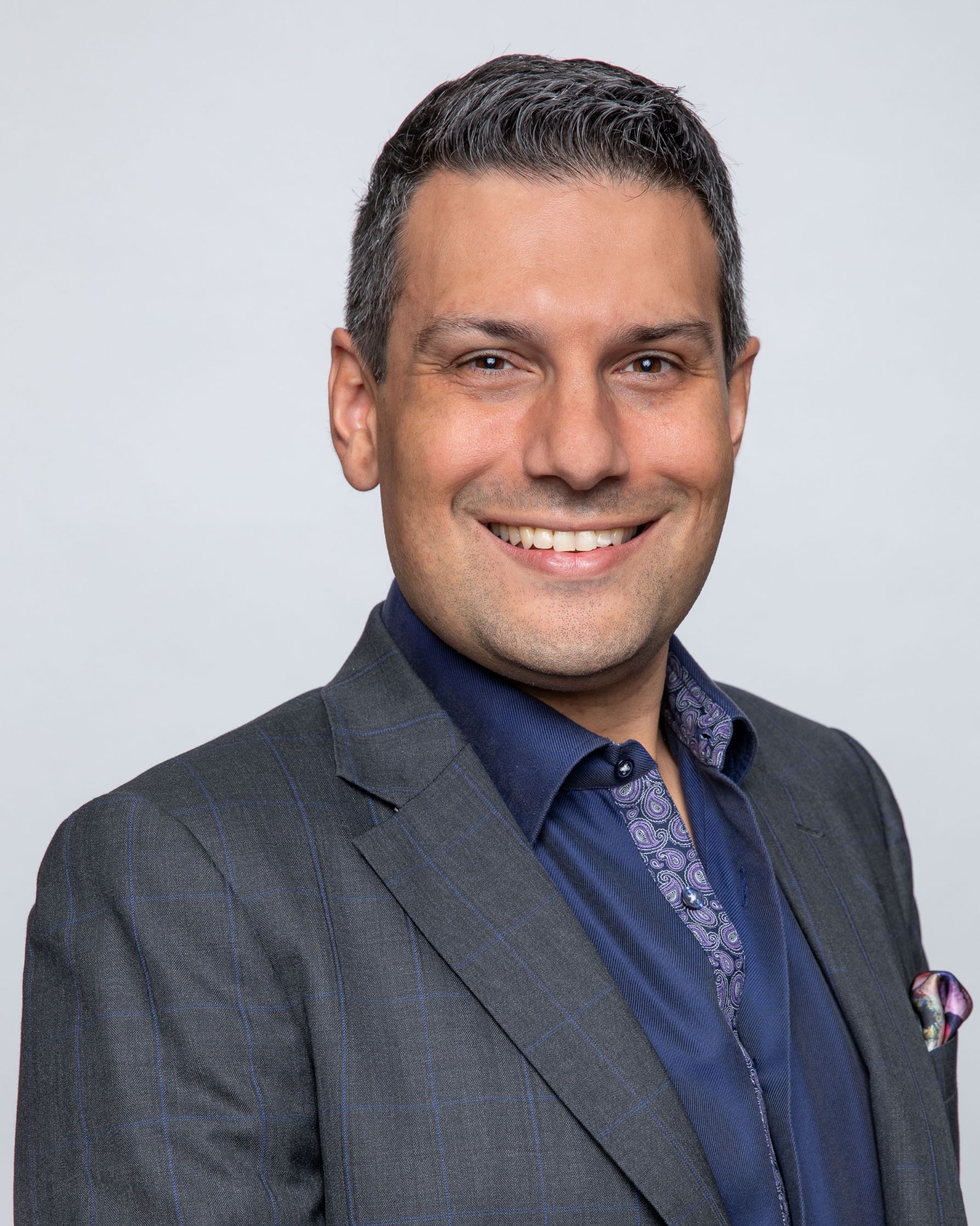
In this episode, I’m joined by Jacob Aldridge, an international business advisor and keynote speaker who’s calling in from Malaysia - where he can literally see Singapore from his window! Jacob and his family recently made a massive “Yes, And” decision: they packed up their life, became full-time travelers, and now “worldschool” their daughter while Jacob coaches businesses remotely.
We talk about what it means to design your life (and business) on purpose, why uncertainty is often the very thing that makes you valuable, and how to stop waiting for perfect clarity before taking action. Jacob also shares a practical lens for navigating economic uncertainty (without spiraling into fear)and the mindset behind his message: Don’t Waste a Good Recession.
Key Takeaways
- Don’t wait for certainty - uncertainty is often where you create the most value.
- Big change becomes doable when you apply: Permission → Listen → Choose.
- Instead of trying to eliminate volatility, build an anti-fragile approach: change should make you stronger.
- Recessions/downturns can be a strategic advantage window, if you’re willing to adapt.
- Watch lead indicators (signals of what’s coming) instead of only reacting to lagging results.
- A simple “Yes, And” principle: act in small steps toward a bold direction, and adjust as you learn.
- Want more agency? Consider Jacob’s provocative starting point: turn off the news and listen inward more.
Relevant Links
- Jacob’s custom listener page mentioned in the episode: https://jacobaldridge.com/avish/
- Jacob Aldridge’s main website: https://jacobaldridge.com/
- Jacob’s keynote speaker page / topics https://jacobaldridge.com/speaker/
- Jacob aldridge on LinkedIn: https://www.linkedin.com/in/jacobaldridge
- Avish's Yes, And site and website: https://avishparashar.com/
Unedited Transcript
Avish Hello, Jacob, and welcome to the podcast. How are you?
Jacob I'm fantastic, Avish. It's good to be here.
Avish Well, it is great to have you here. And you are coming I'm in Philadelphia, and you are coming to me via all the way on the other side of the Earth, is that correct?
Jacob I am. Right now I am in the city of Johor, Bahru, Malaysia. I can actually if I look out my office window, I can see Singapore, the island of Singapore, just across the straits.
Avish Well, that is fantastic. I think you now have the record for the most geographically distant guest I've had on my podcast, so congratulations.
Jacob Maybe I can come back in six months and reset the record somewhere else.
Avish I'm not sure where you would go, but we can try. I'll write you up a little certificate of achievement for that. You know, we speakers, we like our credentials. You can add that to the answer. Well, Jacob, thank you for being here.
Avish What I would love is for people who are listening who are unfamiliar with you and your work, could you just give us the kind of one-minute overview of who you are and what you do?
Jacob Sure. Jacob Aldridge. As you can tell from the accent, not a Native American. I've come from Australia, but am currently a full-time traveler with my family. So I've been coaching small and medium-sized businesses for 20 years, doing a lot of speaking in person and virtually, particularly the last five or six years since virtual conferences became more of a thing.
Jacob And 12 months ago, my family realized that we didn't need to be in any one city in particular. So we packed up our house, put our entire lives into a suitcase, and became full-time travelers. So we visit 6 to 10 countries a year, continue to coach remotely, deliver conference presentations remotely, and obviously jump on a plane to get to events where my clients or other events are looking to have me there.
Jacob In addition to that, I'm a family man. I do enjoy the travel. I enjoy working with businesses. And what I really love most about this life, despite all of the travel admin challenges, is just the extra family time that it's created for us with a young child.
Avish Well, you know, I have a bunch of questions I want to ask you specifically about your business and things, but let's just jump into some of the stuff you just talked about. So I'm curious, you mentioned being a young child and family, but moving all around. So when you say my family, who does that include?
Jacob Me, my beautiful wife, and our soon-to-be seven-year-old daughter.
Avish Wow. And so you move every couple of months with a seven-year-old?
Jacob Yes. Yeah. We run what they call world schooling. So we're homeschooling and integrating that with travel around the world. And yeah, we live out of suitcases. Every two, three months, we pack everything up. We hop on a plane or a train. We move to a new city, a new country, and weave that into our day-to-day lives.
Avish So my topic is my background is in improv comedy, and I talk predominantly about this idea from improv of saying yes and instead of yes, but which that sounds very much like a yes and let's do this, right? So many people would be like, ah, but we can't do that.
Avish I'm curious, is that an idea you had in your head for a long time, or was it just something it came to you and then you and your family decided, yeah, let's do it?
Jacob It was definitely a long-term plan. When my beautiful wife and I got married in 2008, I went overseas for the first time. And like most people, we got home from the holiday and thought, oh, wouldn't it be great if the holiday never ended? And I think a lot of people, whether it's travel or other things that they're interested in, they have that thought. And you're spot on. It's the yes, but. Yes, but that's not realistic. Yes, but life means that that isn't impossible.
Jacob And it took us a number of years. We lived in London for a few years, did a lot of travel before we had children. Took us a long time to have a child. And it was coming out of a really horrible experience where we sat down and said, OK, let's get really intentional. If we could create anything, what would that look like? Let's not ask ourselves whether it's realistic. Let's not ask ourselves if our friends or family would approve. What would our real ideal life look like? And this is it. Full-time travel, remote work with a small number of really awesome people, businesses.
Jacob And it was as soon as our daughter was born in 2019 that we really started it. She was four months old when she went overseas for the first time. She visited 17 countries before her first birthday. And we thought that was going to be easy. I mean, travel with a baby is ridiculously easy. Highly recommend it.
Avish It is now, right? When you're in it because when I had our first baby, like travel, oh, yeah, travel. Then they got older. You're like, oh my god, we should have traveled more when you were smaller because it's so much harder.
Jacob Absolutely. And we were blessed, I suppose, in that the world shut down. We were back in Australia packing up our house when the borders started closing in 2020. And so we were forced to not do as much travel with the toddler, which is probably a blessing.
Avish Probably worked out all right. Well, I'm curious, right? So you know one of the things I talk a lot about is change, and I'm sure as a business consultant strategist, you do as well. And you know the whole theory is you know looking at change as an opportunity. And you know when the world sort of shut down with COVID and everyone switched to virtual, it seems like you were able to kind of almost pivot that into an opportunity because with everything becoming more and more virtual, that suddenly gave you a little bit more like with clients being more comfortable, you know everyone got comfortable with being on virtual. All of a sudden, you're like, hey, we can work remotely a lot easier now.
Jacob That is so, so true. 2019, when we went traveling, I lost half my clients because they didn't understand what Zoom was. You know when you get back and we didn't have specific plans to come back at that point, when we can do this in the boardroom, when you can write on the whiteboard next to me, you know that strategy. We don't do this online thing. And the speaking certainly was that. We don't want to project somebody up onto a screen. We want somebody here in person.
Jacob And then again, another COVID blessing was all of a sudden in 2020 and beyond, clients were like, please don't come. Why would you come to my office? I love this. I can dial in. I can do it from home. We had one day where we were actually in a client's business, and every single meeting we had was a Zoom one-on-one session with their lawyers, and the lawyers were all working from home. And that was the point at which we realized the clients were not going to care if we were in the same city, in the same office, or if we were in Singapore.
Avish Yeah. And then that helps you with your travel and remote. That's great. So pivoting a little bit then, this makes a nice transition. It's a little clever segue.
Jacob Well done.
Avish You mentioned with your family, you know you stopped and stepped back and said, well, let's not worry about the how. If we could build any future, what would it be? That also sounds very much like a sort of business consultant coaching type question. So is that an approach you take when you're working with your clients?
Jacob It sure is. The specific framework, three little questions, is permission, listen, choose. So if you gave yourself permission to do anything, and you can wrap a business context around that, or you can wrap family, your entire life, if you gave yourself permission to do anything, what would that look like?
Jacob And then listen, listen to your body, listen to your heart. Don't listen to the brain that wants to be right or which will find all of the objections. Listen to what your body is truly saying you could do or you want to do, and then choose.
Jacob Choose to do it, which is then when the strategy piece might come in. We set this goal in 2016 to be a full-time travel family. We didn't have a child at that point. She took another three years. And then through the pandemic, that knocked us around a little bit. It changed the business model a little bit. And so it was 2025, nine years it took us to really fully implement that choice. But we were clear on that choice. And so every decision we made filtered through, this is the life we're choosing to build.
Avish Yeah. And I like that it's like a long-term, you know the small step-by-step because so often I feel like you hear you know motivational "speakers" you know talk about, well, burn your boats, jump in, and just like.
Jacob Build a parachute on the way down.
Avish Exactly. And there's something to that. I'm more of a think huge, right? Impossible goal. Like, what do you want? But act you know one step at a time. Like, what's one step? Build a momentum because you learn and adapt also as you go, right? A lot of times, if you thought this is the way we're going to like, I don't know how it was for your plan, but you probably envisioned, here's what it's going to look like. And then along the way, building towards that, you're like, oh, no, we need to adapt.
Jacob Absolutely. Yeah. Last year, our first year of doing the schooling as well, contrast was really the theme for the whole year. We went to countries we'd never been to before. We tested out the remote work and the balance and working less, schooling more. How often do we move house? How often do we do the tourist thing versus being normal people grocery shopping? And a real contrast around all of those choices to then allow us to say, OK, this is what's working. This is what we're enjoying more. Let's do a bit more of that next year.
Jacob And let's keep learning because the person I was last year, the person I was in 2016, the person I was when I first went overseas is not the person I am today. And who I am today, what I want today is not the person I'm going to be next year. So there's no point setting everything in stone. You have to continue to be flexible.
Avish Yeah. And I love that with because this is very much like my improv comedy background. It's like when you're doing improv, the minute you think where the scene or story is going to end up and you try to drive towards that point is where you've totally lost the plot.
Avish So how do you see this playing out with businesses and professionals you work with? Because I can tell you in my experience, I find a lot of people want to have the whole plan sort of clear and laid out and certain before they step versus like, hey, let's see what happens. So how do you find that with your clients? And do you get a lot of resistance, or how do you kind of get them on board with that sort of approach?
Jacob One of the themes I like to talk about is anti-fragile. And not necessarily in small, medium businesses, most of our clients are 12 to 100 employees. So we're not talking massive corporations that need to redirect.
Jacob With the anti-fragile principle, the idea is that you need to establish your business such that change makes you stronger because you will always have change. And the other conversation I sometimes have is I point out to the VUCA research. We live in a volatile, uncertain, complex, ambiguous world, right?
Jacob Business exists to add value. Every single business in the world, whether you're a plumber in Des Moines, whether you're a lawyer in Philadelphia, or whatever it might be, whether you're an improv comedy troupe traveling the world, you exist when you're in business to add value. You add value to people. Some of that comes back to you as money, and that's how the business survives.
Jacob You add value in a VUCA volatile, uncertain world by finding a little way to create certainty where there is no certainty, to add confidence where there is no confidence. And then business owners immediately think, oh, how do I establish this so that there's no volatility, there's no complexity? But that would actually be getting rid of the very thing that allows you to add value in the world. You are helpful to people by living in the ambiguity.
Jacob So don't think you can get rid of that ambiguity because all that will do is drive you crazy and miss the opportunity you have, which is to lean into it and to say, yes, this is going on, and yes, this changes, and yes, maybe the economy is going to crash tomorrow, or we're going to go to war tomorrow, or we're going to have an AI revolution, and my business is going to become 10 times better tomorrow. Any of these things are a possibility. So how do I make sure that me and my team are ready to grasp that opportunity instead of thinking we need to put everything neatly into a box?
Avish I like that. It's that the not only because I talk a lot about uncertainty and stepping into it, but I haven't thought about in those terms of like the uncertainty is your opportunity to provide the value that people are going to pay you for.
Avish Now, you know a lot of you're addressing the business owner and the business union you consult with that. A lot of my audience is more you know employees, you know HR people, accountants. And I'm curious, do you feel the same dynamic applies to you know the people kind of working in the you know middle managers, executives, not necessarily the owners and the top brass?
Jacob I think you absolutely need to be really clear across all aspects of your life. Where does your work fit in? Because you talk about those motivational speakers. We can get fed some myths, I believe, that people then use to judge themselves. Liz Gilbert, Elizabeth Gilbert, who wrote Eat, Pray, Love, and subsequently a whole lot more great personal development work, one of my favorite speakers that I've ever seen live, she has a wonderful conversation around understanding where your work fits. Is it a hobby? Is it a job? Is it a career? Or is it a vocation? And when you make that choice and you can change that choice, when you make that choice, it allows you to embrace that for the opportunity that it is.
Jacob There's no need, I think, to take somebody who's waiting tables while they're at college and treat them like this is their vocation. They're sending a man to the moon while they make sure that they wipe food off a plate. For those senior managers in particular, you've really built a career, and maybe that is also your vocation. You feel that that is your calling. And if that's the case, then how do you lean into that? How do you develop your skills? And how do you apply that within the context of the organization that you're in?
Jacob And some companies are a lot more innovative. They're a lot more responsive to change than others. And there's no right or wrong choice there. It's just making sure that fits because if you want to be on the cutting edge of innovation around safety research and you're with a company that wants to keep running things like the 1980s, that's not going to fit for you, and it's not going to fit for them. So it's working out what you're creating for your life and making sure that the company fits in with that and then give it what you can.
Avish So do you in your work help organizations or even individuals answer that question? Like, what is you know my work to me? Or what is at my core? What's important? Like, is this a piece of what you do when you work with groups?
Jacob It is, and within that business context. So that's one of the key things where a lot of executive coaches will often work at that individual level and largely the individual level only, which is why a lot of executive coaches, you know they're mostly used for PIP, for moving people on, or inadvertently end up helping their clients quit because they help them realize those things without understanding the wider business context or without changing the business as well.
Jacob So when I go into organizations, I represent the organization. I'm there for the company. What is this company doing? And then how do we hold the directors or the owners accountable for making that change happen that they say they want to do? And then working with the individual team members to make sure that they're stepping up and committing not from a stick accountability, beat them commitments piece, from an inside out, this is what I'm choosing to do with my life, and so I'm going to choose to do it well.
Jacob So it's absolutely part of the conversation within that wider, where is this organization, where is this business headed, and how do we allow it to do that more effectively and to ultimately create freedom through business for the owners and the team that want that?
Avish OK, I like that. And so sort of a random question for you. And I find a lot of consultants and coaches fall into two categories. Do you prefer working with organizations, individuals who are already open and receptive, or do you sort of enjoy you know cracking the nut of the sort of we're resisting, we don't really think this is going to work for us? Which do you prefer to does one juice you more than the other?
Jacob I'm nutty, not a nutcracker. I don't have the time or inclination to work with people that aren't raring to go. It's one of the criteria I have for clients is that they have to have a bias for action. They have to recognize that they've got high agency. My favorite clients are those business owners that are going to go and do something tomorrow, and they want my help to make sure they do the right thing. And they'll have a great coaching session.
Jacob It might be an hour. It might be a day. A whole lot of actions come out of it. And they call me 48 hours later and say, OK, what's next?
Jacob I sometimes get referrals or people come off my website, and they say, I need accountability. I need somebody who can hold my hand and make sure I'm doing. That's not me. If you need somebody to kick you in the rear, that is I'm not interested in that. I'm here to help change lives of people who are actively and proactively changing their own lives and want some guidance around that.
Avish Yeah, I love that. I'm the same way. I know some of my speaker buddies, coach buddies, they really like to you know go in with the person and figure out how to reach them. I'm like, dude, I'm an improv comedian. Like, give me the person who's happy, who just wants to take it to the next level. But hey, you know everyone, there's a place for everything.
Avish But I want to touch upon something you kind of jokingly said, you know that you're nutty, but not a nutcracker. There's something on your website. You describe yourself as the smart and quirky coach. So I'm curious like what that means and how that sort of came about as a moniker for yourself.
Jacob The key thing in business, and I'm coming up on 20 years in my business now, is that you have to be authentic. And yeah, I'm smart. I have this sense of humor, which is fairly potent, fairly strong.
Jacob I remember speaking at a conference in Boston, ooh, 15 years ago now. And I told a joke, a little bit of a blue joke, a lewd joke. And one of the guy who was the CEO of the company over there was actually Australian, which is how I got the invitation. And he came up to me afterwards. He said, that's the funniest thing I've ever seen somebody say on stage. And you'll never work in this town again with that kind of so there's different sensibilities there.
Jacob But I find that that is engaging for the right people. It helps explain a lot of business concepts. It's not dry theory. It's references to TV shows, to movies. It's cracking jokes with the team. And if you can do that in the right way, the joke you know that was a joke that was ultimately about sales. I was talking about sales training. It helped explain a concept while also being humorous. And that's that quirky nature. It doesn't always land.
Jacob Some of my dad jokes, they're not especially well received. I just tend to lean into that. The favorite speech that I give, the favorite presentation I give is a spontaneous kind of conference wrap-up. So I get that.
Avish I was going to ask you about that because I'm jealous. I'm like, ah, that's great. So let's talk about that.
Jacob Yeah, this is it scares a lot of conference and event hosts. The idea is I ask every other speaker at the conference to send one of their slides to the event organizer and get the event organizer to create a slide deck. Depending on the number of speakers, the time that I've got available, it often works out to be about one minute.
Jacob So I then, at the end of the conference, the final session or the final speaker, I step up on stage and deliver a closing keynote summarizing the themes of the conference, using a slide deck, which I have never seen before, which is not coherent. It's essentially a random mélange of all of the other speakers from the conference. And my task on stage is to make that make sense, which, as you know, from improv comedy, I've got a theater background. There's nothing more exhilarating than being mic'd up on stage by yourself, knowing that you're either going to knock this out of the park or you are going to horribly, horribly fail.
Avish And when I read your description of it, because you know I've had this idea for a long time of doing like an improv blind peek-a-choo-ga type thing, where that was a huge thing like 20 years ago or whatever, 15 years ago. Never quite figured out. I'm like, where do I get the slides from? And then it was just so obvious when I read your thing.
Avish I'm like, oh, yeah, that having the other speakers give you a slide each is brilliant because not only then does it solve the question of, well, where am I getting these slides from? But it makes the whole thing cohesive. And it sounds like such an amazing way to end.
Avish Do you get booked for that one a lot? I feel like, like you said, it could go either way. Like some people would be scared of it, but others would be like, I feel like I would look at that and be like, wow, that sounds like a perfect way to end our conference.
Jacob Not as much as I would like. And I think it is some of that fear perspective that it's hard to explain sometimes. It's hard for conference coordinators to understand. And
Jacob so it is quite the risk. What if something goes horribly wrong? Why don't I just get Jacob? I do a lot of closing keynotes, yeah that can kind of make sense. It's like, here's a theme. Here's a presentation. So it's certainly something I would love to do a lot more of in the coming years.
Avish I feel like that I don't know if you do this. I feel like that would work very well if you did like the opening keynote and then came back to close that way. I feel like that would be a nice little bookend.
Jacob I'm just going to sorry, Avish. I'm just going to shift that light is starting to I don't quite know how to solve that problem. I've just noticed my
Jacob this is when you say it is actually live.
Avish Yep, it is live. And that's right. I'm looking at my face. I looked at my face about 15, 20 minutes ago. I'm like, oh, my lighting is terrible. I don't usually record at night when I've just got my bright light. Like I'm totally washed out. So if you're watching this on YouTube, you know what we're talking about. If not, then you use the theater of the mind and visualize.
Jacob So sorry, sorry to shift that.
Avish I just mentioned like I feel like bookending this is like you do the opening keynote and then kind of wrap up the closing because then they've already seen you. This random like sort of improv slide thing makes a lot more sense if they've got some familiarity with you.
Jacob I've got yeah, the workshop, the presentation where it landed the best. And I've been back years since. And the host of that conference always now in the introduction talks about how that was the best thing she's ever seen on stage. And that was an event where I spoke at year after year. And I've been there five years doing the closing keynote when I first rolled that one out.
Jacob And so to your point, the audience did know me a little bit. There was a little bit of trust. And they also had an appreciation of my sense of humor. So some of the slides you've got to roll with, it's like, how do I connect an image of two elderly people holding water pistols with the conversation I'm having right now, which is about bursting through obstacles in your small business? And the humor, the quirkiness has to be part of that.
Jacob And in that particular example, I was able to spin out that often the things we fear most are going to stop our business turn out to be old people with water pistols.
Avish I love that. Nice way to tie it in.
Jacob Improv, improv.
Avish Yeah, that's 100%. So you have a theater background. Did you do improv as well as part of that, or?
Jacob A little bit of improv, never as much as I quite liked. We didn't have a big improv scene in Brisbane, Australia, when I was at university. So I was more of a thespian, trotting the boards, being Richard III.
Avish Oh, nice.
Jacob And that approach to theater and to a lot of small films and student films and those kind of things back in the day. But I realized actors have about a 96% unemployment rate. So if I just acted like somebody who understood business, I was going to be able to make a lot more money.
Avish I had a similar conversation with myself after college. I considered pursuing moving to Los Angeles to do the acting thing because I did theater and improv theater in high school, improv in college. I decided to keep doing comedy. But I realized that kind of your point about the percentage of success. And I didn't want it enough to put up with what you had to do to get there. Fortunately, at 22 years old, I had that like I was mature enough to make that self-knowledge. Like, I'm not going to put myself through that.
Avish Well, let's take a quick little detour. Then you mentioned you know theater background. You said you know you like to tie in you know movies and TV shows. You got an answer to the question. What's your favorite movie?
Jacob Favorite movie is still Breakfast at Tiffany's, Audrey Hepburn, 1961.
Avish Yeah, sure.
Jacob That was a classic. When I set the Guinness World Record for the world's longest movie marathon, that was the movie we started with. It was Breakfast at Tiffany's, largely because my friends that I set that record with were very clear they did not want to be watching that, having been awake for 48 hours. So we started with that one. And that's definitely my favorite movie.
Jacob And I like the mix. Fatherhood's been pretty brutal on my movie watching in terms of being able to find the time and then adding in business ownership and now the full-time travel and the additional travel min that that throws up. The best movie is the one you feel like watching. I watched some terrible John Travolta heist movie last week because I just needed something that was kind of pointless. I enjoyed that more than I would have enjoyed a classic.
Avish Was it Swordfish?
Jacob No, no. Swordfish isn't too bad a movie
Jacob for some reasons that I won't mention.
Avish Oh, OK.
Jacob No, this was $500,000 well spent. This is I think it was High Roller. It is a very recent pay the mortgage kind of movie that John Travolta was in.
Avish All right. Well, just very quickly, you sort of dropped this little line in there about so you set the world record for longest you're like in the Guinness Book of World Records for longest movie marathon?
Jacob It had the record has been broken. So I'm not in the book anymore. But it's a little bit like you might remember, they introduced all of those speed suits in swimming, which you know smashed all of these world records. And then they later went back and said, actually, that's cheating. Or it's the doping. And you know that's my take on this.
Jacob When I set the record and watched movies for 63 hours and 27 minutes, you know there were very strict rules. You were only allowed to go to the bathroom after every third movie was the hardest one to follow. Now they've updated the rules. Now you're allowed to have a nap, a 15-minute nap in between each film.
Avish So you stayed awake for 63 shade hours watching movies?
Jacob Yeah. And with that bathroom restriction, you couldn't rely on coffee to keep you awake because coffee, of course, means you need to go to the bathroom. So it was yeah, it was something I was able to do in my youth that I don't think I'd be able to replicate today.
Avish That's fascinating. All right, we're kind of getting back on the topic a little bit. I told you we're going to be improv ADD brain.
Jacob All right. Look, I'm the smart and quirky guy, right? I've got more than one facet to my life.
Avish Well, because being quirky and sort of humorous, you've got some interesting keynote titles. And one of them, especially since my topic is change, is Don't Waste a Good Recession, which I'm assuming is kind of what we talked about near the beginning, which is about looking at change and even setbacks as an opportunity for growth or opportunity or something positive. So is that or could you explain a little bit what you talk about in that keynote and kind of what your approach is when it comes to that in business?
Jacob Yeah, absolutely. And that was the topic that got me the Virtual Speaker Hall of Fame nomination going through the coronavirus recession. And it was something I was delivering back during the financial crisis, the Great Recession in 2008, 2009 as well. And it is that mindset. It's finding the opportunity, even when it's very easy to feel that you are at effect, that there's no opportunity. Mike Tyson wonderfully said, everyone has a plan until they get punched in the face. And recession is usually a punch in the face to your business plan.
Jacob However, we know that more opportunities, more market share in particular, is created during an economic downturn than at any other point in the economic cycle. When things are going really well, as they largely are at the time we're recording this talk to me tomorrow when things are going really well, customers don't need to change. Staff don't need to be really that efficient. Business owners can get a little bit fat and lazy. And there will always be, at any point in time, some businesses doing better than others. When the market really turns, when the money dries up in your customer base, that's where innovation is delivered.
Jacob And there's a few key changes that come through every economic cycle. Your customers change. If not the actual who they are, what they value, what motivates them to buy changes. Your team will change. And therefore, your product and marketing mix has to change as well. And so the business owners that struggle the most are the ones that suppress their feelings and bury their head in the sand around having to make change when the economy changes.
Jacob Most businesses just follow the cycle. They go down. When the broad market goes down, they come back up. When it comes back up, the ones that really thrive as opposed to just surviving are the ones that are honest about their feelings and how they're responding to it. And they act strategically. Where is the opportunity here? And I get to look clever with some of my forecasting based on a lot of research now, 20-plus years of researching the topic with the coronavirus.
Jacob In March of 2020, when I started running some weekly Don't Waste a Good Recession podcasts and videos because everyone was wondering what was going on, one of the things I asked people to do was, if your business has to close, if your business is down by 50%, if it's down by 20%, model out what that means in advance so you can respond. But also, what if the business is up 10% this year? What does that look like?
Jacob And for many businesses, 2020 was actually a record year because of all of that stimulus that got pumped through the economy. And so the business owners that were looking for the opportunity grabbed the most opportunity there. And that is exactly the theme of Don't Waste a Good Recession. And it's one I hold in my pocket, ready to roll out at any point in time whenever you know the next Trump dump might trigger something or the AI bubble explodes.
Avish I was going to ask about you know maybe we can get just a tiny bit tactical because I feel like and I forget. I feel like depending on which news channel you listen to, either the economy is doing great or we're in a terrible recession.
Avish But I do feel there's a lot of economic uncertainty and hesitation. So for people listening, whether they're in a recession, what's like one or two tactical things they can do to start a start looking for that opportunity or building in the opportunity instead of head in the sand or just riding it up and down like everyone else does?
Jacob Yeah. Well, it's important to understand we came out of the pandemic with a K-shaped recovery. So depending on which side of the Atlantic I'm on, there are some people who are doing really, really well right now. You've got a 2.3% mortgage, house is up 50%. Your 401(k) is doubled. Your business profit's doubled. You're doing very well. So there's a lot of money out there being spent in the market. And then there are a lot of people who took that punch in the face and still have not been able to recover, particularly on the employee side, where you've got a bit less agency around your income and your flexibility. And so that's why we get the two different movies on the news screens because if you talk to the people who are doing really well, we're doing really well. If you talk to the people who are struggling, they're struggling. And how do you reconcile those?
Jacob The key thing for businesses is to understand your tactical indicators. You get lead indicators, current indicators, and lag indicators. So for example, the number of inquiries from your website or your marketing is a lead indicator that's going to tell you what's happening in the future. Your actual revenue this week is a current indicator. And then your profit the last quarter is a lagging indicator. Too many business owners make decisions based only on those lagging indicators. They print off the financial reports after the fact and then decide to pivot or change. So it's what are those lead indicators for your business, which can give you some insight into what's coming up next.
Jacob And then if you want to keep an eye on what are some of the lead indicators in the broader economy that can give you some insight? And the easiest one is the S&P 500. It is a lead indicator of people who are investing, who are moving the numbers on the markets, are either buying or selling today based on what they're confident will happen in the future. And so the S&P 500 becomes a forecast of sorts of what a lot of people putting money where their mouth is believe will happen in the future. The only challenge with that is the time frame.
Jacob During the Great Recession, 2009, 2010, it was about a six-month lead indicator. When the stock market went down, about six months later, that hit mar and par on Main Street. When the stock market picked up, that gave us three to six months' notice that the broader economy was going to work. And now's the time to invest in those strategies. During the coronavirus recession, it was about three to four weeks where we had much less notice. So it's a lead indicator. But that doesn't necessarily mean we know exactly the timing of that flow through. But that is something.
Jacob And so at the moment, at or near record highs, that tells me that private enterprise is going to be strong for at least the next three months. So even if there is something significant, OpenAI come out tomorrow and say, actually, we've just got 100,000 people in India who are answering all of your questions. None of this is actually done on a computer. And the AI bubble bursts. That's not going to affect the plumber in Des Moines for another three to six months. So it's a lead indicator, which ought to give people the confidence about what they're investing in tactically today.
Avish Well, let's talk. And I know, like I said, this is a lot of talk about the business, the business owner. But you mentioned kind of the plumber or the Main Street mom and pa. Let's just say that because you know one thing people, when they hear you do improv, they're like, oh, you just wing it. It's like, no.
Jacob Oh, yeah. That presentation where I've never seen the slide deck before, the most preparation I have ever done.
Avish Yeah. And you still got to prepare. It's just when things go wrong, you can adapt. So when you see these lead indicators and let's look at both. Let's say a lead indicator is promising, like, oh, the economy is going to go up. Or on the flip side, lead indicator is like, oh, what are things that people can do now to sort of start preparing for or taking advantage of that thing that the indicators are showing is going to happen in three to six months?
Jacob As a business owner, the big part is, what am I actually trying to build? And does my team understand that? Now, some of that is a very masculine conversation. I talk a bit about masculine and feminine energy.
Avish Yeah. You got a whole keynote about feminine energy.
Jacob Yeah. Yeah, yeah. Which is not male versus female. I don't love that it's a masculine, feminine. But that's the thousands of years of literature speak to that. So that's what I use. Men tend to be more masculine. Women tend to be more feminine. We both have both. The masculine part of all of us loves that future. Oh, in 10 years, in 20 years, I'm going to be wherever I'm going to be. The feminine doesn't like that. That feels scary to the feminine energy, again, in all of us.
Jacob And so when I work with female business owners, the conversation is often, well, what would you like to be different today? It's actually the same question. It's just, what does that change look like and why? Because if you're not sure on how your life could improve when indicators go up or down, it makes it very hard to decide, how do I respond? What's going to move me in the direction of the change that I want?
Jacob And I think similarly, for employees, for everybody, it comes back to some of that antifragile perspective, which is, how would you respond to change, whether it's expected or not? And when you see the statistics about how few people have $1,000 in their savings account, that is challenging. During the coronavirus recession, unemployment in the US went to 16.6%. Like, 1 in 6 people were out of work. And then a huge percentage more were underemployed or were business owners not paying themselves those kind of outcomes.
Jacob Are you able to respond to that? Because if your worst case is OK, then you can take more risks. You can take more chances to move in the direction that you want to with your career, with your business, with your life. And that's where I think a lot of people just get stuck in a rut. And as the saying goes, if you stay in a rut long enough, it turns into a grave.
Avish I feel like this sort of comes almost full circle back to where we started, right, with the question with you and your family, like, well, if we could design anything we wanted, what would it look like? And then the second question is, how can we make that happen as things improve? And how can we make that happen as things kind of go down?
Avish But it starts by knowing, well, where do we want to go? What are we building towards? Versus I think the ones who just get pushed along are the ones who are more like, well, we're not really looking forward. We're just getting a day to day. So if things get better, they get better. If they get worse, they get worse.
Jacob And it's that difference. Do you believe that life happens through you? Or do you believe that life happens to you? And for a lot of people, they see life as something that happens to them and that they can't control, that they can't manage, that they can't manipulate.
Jacob And I blame news a lot. I trained as a journalist as one of my many, many things. You know the news media wants you to live in fear because that gets clicks, right? That gets eyeballs. That gets people buying ads.
Jacob That's all circle of concern stuff. It's things that you can choose to let concern you or choose to not let you concern you. What are the things you control? What are the things that you influence? Because you have way more agency in life than you probably realize.
Jacob And you know one of my jokes/bugbears is it's the people who say, you know why are you working so hard? Why are you working so hard? Why are you working so hard? How come you're so lucky?
Jacob This life that I lead is pretty awesome. It's not by accident. We didn't just wake up one day, and suddenly, we were on a plane to Japan. It took a lot of planning and a lot of responding when the world changed and when it changed again.
Jacob And that can be a metaphor for any change that people want in life. You have to understand that your life happens through you. And nobody else is going to give you the life you want if you don't even know what that is yourself.
Avish Yeah. I love that. I forget who made the quote. But it's you know the harder I work, the luckier I get.
Jacob Yeah. Yeah, yeah. Love that. Love that. Put that on a t-shirt.
Avish Yeah. All right. Well, hey, we're coming to the end here. This has been fantastic. I'm going to wrap up in just a moment and ask one kind of final question I like to ask.
Avish Before I get to that, I wanted to just give you a chance to share just you know if people want to learn more about you, engage with you, either as a coach or a consultant or just kind of check out your information, what are the best ways to follow, connect, and contact you?
Jacob So I've got a landing page on my website, which is JacobAldridge.com/Avish. So that will have some information that we've talked about today, a link to a recession indicator, and some speaking presentations, if anyone's interested, there. And that's a website that people can spend an awful lot of time going down the rabbit hole to understand business, to see some of my speaker presentations, and to touch in on some of the life stuff that we do with the travel and the family and the world schooling.
Jacob My approach in life is to be abundant. I have a lot of amazing conversations. And sometimes, people pay me for that. And that's how I make a living and get ahead. So if anybody's interested in an interesting conversation, whether specifically because I might be able to coach their business or speak at one of their events or just because they think I'm a cool dude, then please reach out. And I'm always happy to have interesting conversations and meet fun new people.
Avish I love that. JacobAldridge.com/Avish. And we will link to that in the show notes and on the website. Fantastic. Well, Jacob, I'm going to wrap up with a question. I like to sort of wrap up all these with you know my whole thing is I talk about the improv idea of saying yes and instead of yes but because I believe the world would be a better place if everyone just made the simple choice of starting with a mindset of yes and instead of yes but. So let me ask you, what is one small thing that you believe if everyone in the world did, it would make the world a better place?
Jacob Turned off the news is a simple one. And it comes back to that comment around taking agency for your whole life. That's not a small thing. Taking agency for your life for some people is changing 60, 80 years of ingrained learned behavior.
Jacob The easiest way to start that is to remove the things that want to make you feel something that you don't necessarily want to feel yourself. And there's too much of news is the obvious one. There's a lot of media out there.
Jacob There's a lot of friends out there who live in that space. And removing that noise allows you to listen that little bit better to your body and your heart with that permission, listen, choose approach. So spend more time listening to yourself and less time listening to other people who want to tell you what to feel.
Avish That is fantastic. I love that answer. That is great. Jacob, thank you again. This was awesome. I got a bunch of notes, stuff I'm going to implement based on this conversation. Thank you very much. And hopefully, we can do it again in the future.
Jacob Thank you for saying yes. And I would love to come back anytime.