
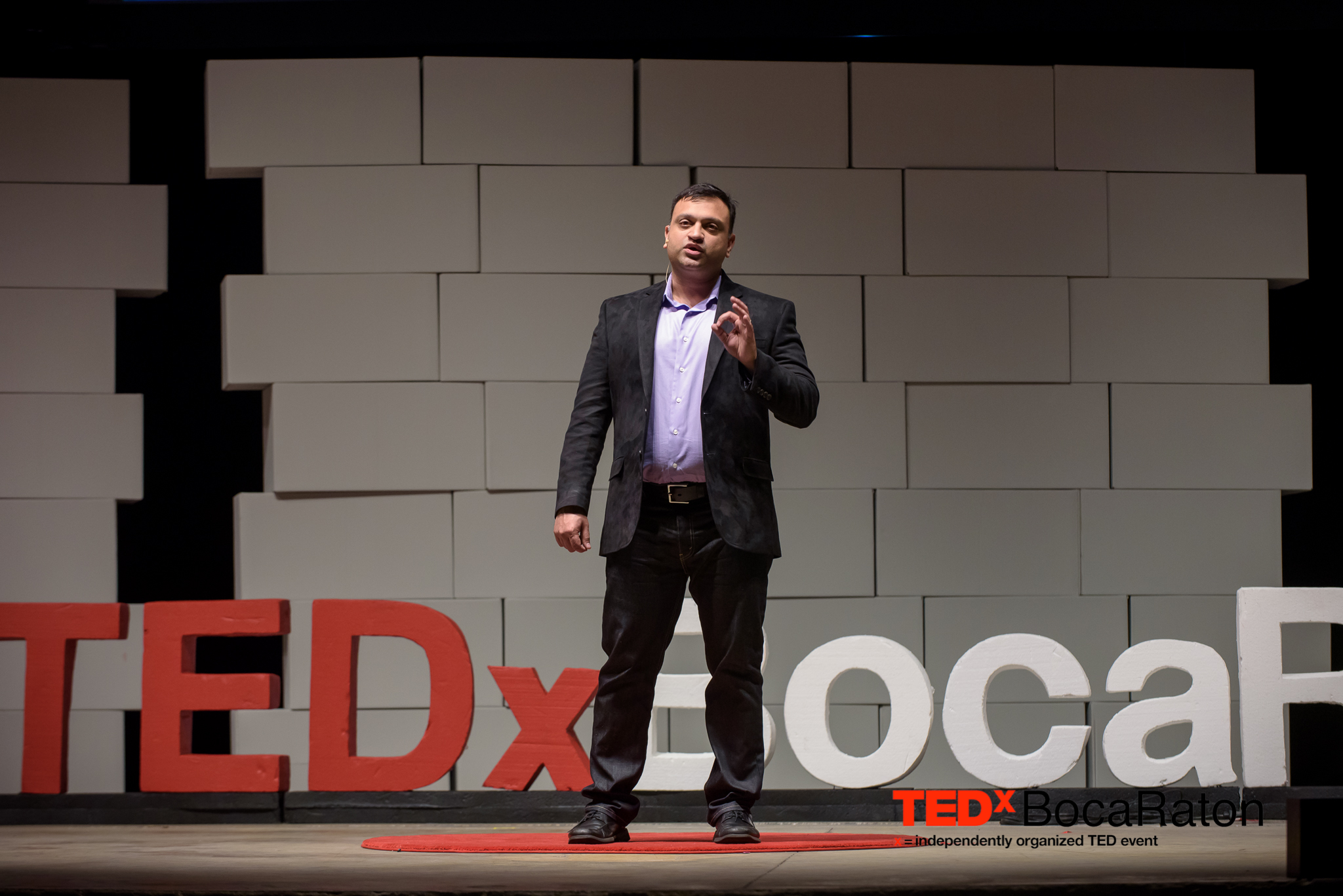
I was on a plane after a keynote a few years ago.
Spent. That good kind of spent where you gave everything you had and you know it landed. I put my headphones on, leaned back, and hit play on "La Villa Strangiato" by Rush.
If you don't know it: 10 minutes, no lyrics, three guys making it sound like seven. Neil Peart on drums. Alex Lifeson on guitar. Geddy Lee doing things on bass that shouldn't be physically possible. It nearly broke the band trying to record it in one take because it is that complicated.
I've listened to this song hundreds of times. On walks. While I'm developing new content. After keynotes. It’s on. Right. Now. As. I Write. This.
It does something to my brain that I can't explain and don't entirely want to.
And somewhere on that plane ride, a thought hit me that I've been turning over ever since:
I want to create the La Villa Strangiato of keynotes.
Now, I know what that sounds like. Grandiose. Maybe a little unhinged. A keynote speaker sitting on a plane comparing himself to Neil Peart is not a great look (especially since there is a 90% chance I was subtly air drumming…).
I know I haven't done it yet. I may not even be close. But I can't stop asking the question: What would the La Villa Strangiato of keynotes look like?
Here's what I mean by it: Rush did something with three instruments that sounds like seven people playing. They created something that people who hear it for the first time say, "wait, how is that only three people?" Improv comedy is usually done with a group. Four, five, sometimes many more performers with years of shared experience working together. The La Villa Strangiato of improv would be: How do I create something as funny, as alive, as in-the-moment as what a full ensemble does, but with just me and one audience volunteer who's never done improv before?
I don't know if I'll ever fully answer that question.
But here's what I do know: Every meaningful innovation in my keynote over the past several years started with asking it.
Not "what's a reasonable improvement I could make?" Not "what would take me two weeks to develop?" But: What would be impossible, and how do I start moving toward it?
This is actually what I want to talk to you about. Not Rush (though I am happy to). Not improv (though I would love to). Not me (unless you really want to).
I want to talk about what happens to people when they stop asking that question.
Because here's what I see in organizations going through change:
The people who are nervous about the change, the ones who are visibly pushing back, who have concerns and voice them loudly? Those people I'm not that worried about. Resistance is loud. It's visible. You can work with it. You can address it. You know where it is.
The people I'm worried about are the ones who are... fine.
Not excited. Not resistant. Just fine.
They're doing their job. They're showing up. They're nodding in the right places during the all-hands. And they have completely stopped asking themselves, "what would my La Villa Strangiato look like?" (okay, not in those exact words; as far as I know, I am the only person on the planet literally asking myself that, but they are not asking themselves the sentiment of the question).
That's apathy. And unlike resistance, it's quiet. It's hidden. It festers. And in my experience, it's affecting a much larger percentage of your team than you think.
Why Apathy is the Real Change Killer (Not Resistance)
Most of the change management approaches I've seen treat resistance as the main obstacle.
If we just communicate clearly enough, people will understand. If we just explain the logic, they'll come around. If we just train people on the new skills, they'll embrace it.
The problem though isn't that people don't understand. The problem is that they don't care. Or more precisely, they've stopped believing that caring is worth the risk.
Apathy isn't laziness. It's protection.
When people have been asked to do more and more with less and less, and change after change keeps landing on their desk before the last one settled, the smartest move psychologically is to stop investing. Stop getting excited. Stop asking "what would be amazing?" because every time you did, it turned into more work and less credit.
The energy of "what could this be?" gets replaced with "let's just get through this."
That's not a skills problem. That's a mindset problem. And no amount of PowerPoint slides addresses it.
The YES AND Approach: What It Actually Looks Like
I use improv principles in my work not because improv is fun (though it is) and not because it's a clever metaphor (though it is that too). I use it because improv performers have figured out something that most organizations haven't:
You cannot perform at a high level, stay creative, and adapt to what's in front of you if your default response to new input is to shut it down.
"Yes, And" is not about being positive. It's not a morale initiative. It's a practical discipline for staying engaged when things are uncertain.
Here's how I walk people through it. Six steps. I call it the YES AND framework, and yes, the letters are intentional.
Y: Yield to What Is.
Not "pretend everything is great." Not "suppress what you actually feel." Yield means: Acknowledge reality as it is before you decide how to respond to it. Most people skip this step entirely. They either fight reality (this change is stupid and I'm going to prove it) or they bury it (I'll just keep my head down). Both of those are expensive.
Yielding is where you let go of what was and start building toward what can be. You can’t write La Villa Strangiato if you are unwilling to stop writing “I Think I’m Going Bald” (yes, that’s another, earlier, Rush song).
This means being honest about what you're actually feeling instead of what you're supposed to feel.
E: Explore and Express Your Core.
If you're going to engage fully with change, or anything, it has to connect to something real in you. My La Villa Strangiato goal works because it comes from my core. I have been doing improv for 30 years. The first time I saw it, I fell in love. The first time I did it, I fell even more in love. That is who I am. The more I lean into that, the more the goal means something.
For people going through organizational change: What is the work that actually matters to them? What did they come here to do? If the change has any relationship to that, find it. That's your thread.
S: Start Small.
Setting an impossible goal is exhausting if you stare at the distance between where you are and where it is. I would give up immediately if every time I tried something new, I evaluated it against "well, that's not the La Villa Strangiato yet." The question isn't "have I achieved it?" The question is "what's one small step I can take today that moves me toward it?"
Small steps are what people in apathy need most. Not inspiration. Not a big reveal. Not a pizza party. A small, concrete thing they can do today that might actually work. That's how you start rebuilding momentum.
A: Access and Apply Your Creative Genius.
Here's the thing I say in my keynotes that people push back on and then later tell me was the thing that stuck: Everyone has an inner creative genius. Everyone. It just gets forgotten and buried. Not because people lose it, but because organizations, often unintentionally, train it out of them. Play it safe. Don't suggest weird ideas. Stay in your lane.
Getting people to access this isn't a team-building exercise. It's about creating enough psychological safety that they're willing to try something that might not work. That's a different kind of leadership.
N: Notice and Nurture Emotions.
When you think about your impossible goal, how do you feel?
If the answer is only dread and overwhelm, it's not the right goal. Or you haven't found the right angle on it. If there's no excitement anywhere, no "this would be amazing if it worked," then the goal won't drive behavior. It'll just create more anxiety.
I tell leaders this too: You can't manufacture excitement in your team if you're not genuinely managing your own emotional state around the change. People feel inauthenticity faster than you think. If you don't actually believe in this change, they won't either.
D: Dig Deeper.
There are two techniques I come back to constantly.
The first is the Toyota Five Whys. Ask why five times. Not why the change is happening. Why it matters to you personally.
Why do you want to create the La Villa Strangiato of keynotes?
To differentiate myself.
Why do you want to differentiate yourself?
So I can stand out. Be significant.
Why does being significant matter?
Because I believe we're here to do more than just get through the day.
Why does that belief drive you?
Because the times I'm expressing my creativity are the times I feel most alive. And I want that for other people too.
That's where you find the real fuel.
The second is David Horsager's How How How technique. When you have a vague goal, you ask "how?" repeatedly until you get to a concrete next step. "I want to innovate my keynote" is not actionable. "I'm going to email three contacts today to ask if anyone wants a free chapter meeting where I can test a new improv format" is.
Abstract goals create apathy. Concrete next steps create momentum.
What This Means For You as a Leader
If you are leading people through a change right now, and you're getting the verbal buy-in but you can feel the energy just... not being there, here's what I'd ask you to consider.
The problem probably isn't that people don't understand the change. The problem is they've stopped asking themselves what's possible.
They've traded "what would my La Villa Strangiato look like?" for "let's just get through this."
You can't logic people out of that. You can't PowerPoint them out of it. You address it by helping them reconnect to what they actually care about, giving them small concrete steps that actually work, and creating enough safety that they're willing to try something that might not succeed.
That's not a soft approach. That's the actual approach.
The leader who told me he went from worried about the change to "giddy" about it? He didn't get there because someone explained the change better. He got there because he found his thread. The thing that connected who he was to where the organization was going.
That's what shifts apathy to excitement.
Not the pizza party. Not the all-hands with the slick presentation.
Asking: What would be impossible, and what's one small step I could take toward it today?
If this is resonating, my new book, “Say ‘Yes, And!’ to Change” goes deeper on all of it. Check it out here.
And if you're a leader who's recognizing your team in this piece and you want to talk about what it might look like to bring this work to your organization, my inbox is open.
But honestly, even if you never reach out to me, do this one thing:
Think about something you want to do, something that would be genuinely great if you pulled it off, and ask yourself: What's my La Villa Strangiato?
You don't have to know how to get there. You just have to be willing to ask the question.
Rush spent years getting to that song. And it almost broke them trying to record it.
Worth it.
P.S. I couldn’t write this whole post without including the song, right…?