
The worst career decision I ever made looked great on paper.
I left a well-paid programming job I genuinely liked. Good benefits, a great boss, solid coworkers including a close friend. The startup I joined instead? It turned out to be a terrible fit in almost every way. Within a year, I knew I had to move on.
It was stressful. Embarrassing. Disorienting. I had voluntarily walked away from something good and landed somewhere that just… fizzled.
And looking back? That “bad” change became the catalyst for the business I’ve now been running for over 20 years.
Which brings me to something Jacob Aldridge said on my podcast recently that I thought was pretty rad (kids say that these days, right?).
"Never waste a good recession"
Jacob is a business coach who has spent years helping companies not just survive disruption, but actually get stronger because of it. He calls this building an “anti-fragile” business. When he dropped that line in our conversation, it stuck with me because it captures something most leaders know intellectually but struggle with emotionally.
Why “Never Waste a Good Recession” Isn’t Just a Catchy Line
When times are easy, nobody 𝘩𝘢𝘴 to change. When things tighten (budgets shrink, markets shift, roles get redefined) opportunity suddenly appears. Not because disruption is pleasant, but because it forces movement.
Recessions, whether economic or organizational, create openings. Customers reassess what they actually value. Competitors freeze or disappear. Old assumptions finally get questioned (or at least, they should get questioned).
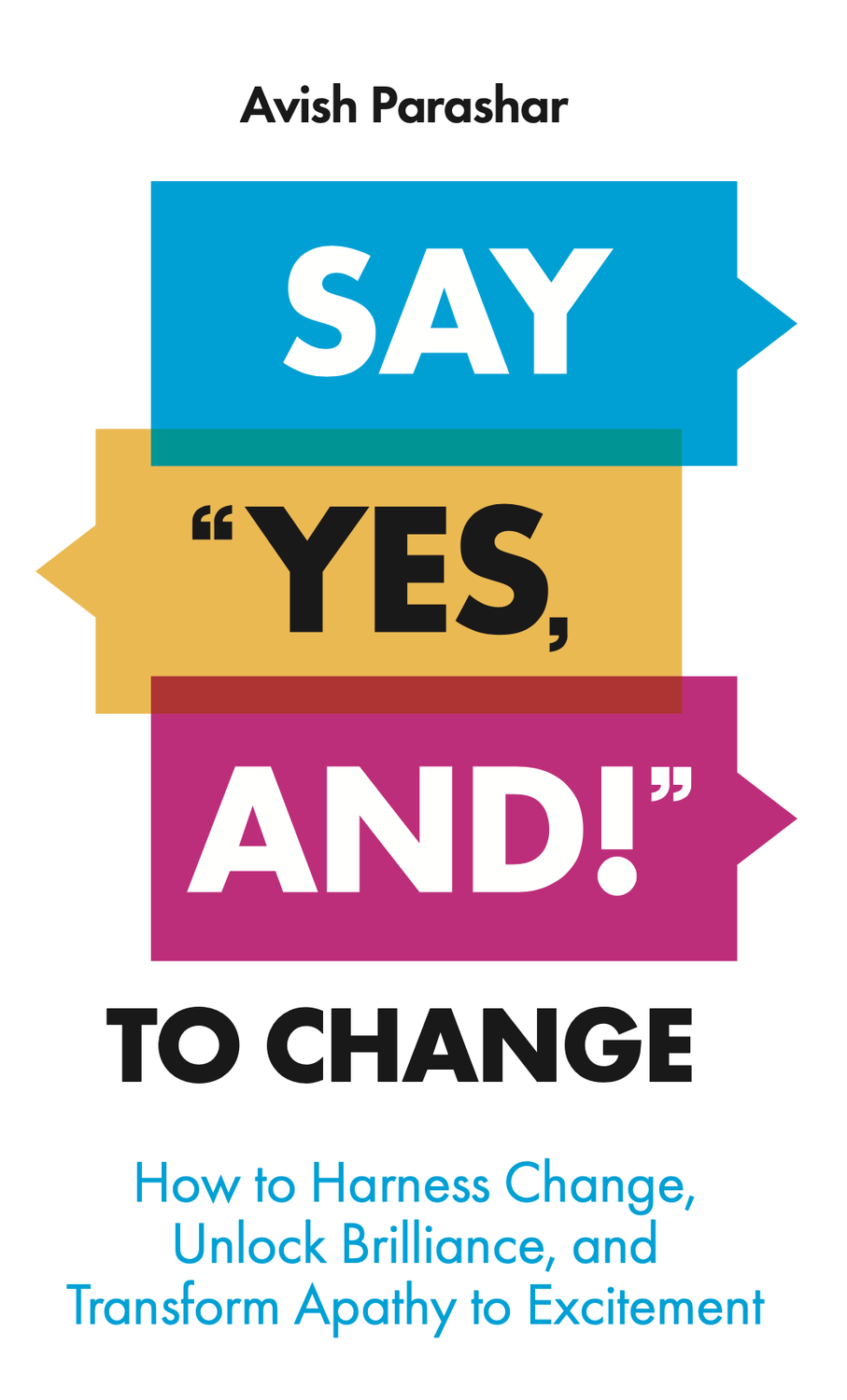
That idea lines up perfectly with something I’ve spent years teaching through improv, and now explore deeply in my upcoming book, Say “Yes, And” to Change…excerpt below.
Not All Change Is Good
Let’s be clear: Not all change is positive. Some change is painful, unwanted, or downright disruptive. Some change knocks the wind out of you and some change rearranges your life whether you’re ready or not.
Losing a job, losing a leader you loved, losing a sense of stability or identity… none of that is “good.” I’m never going to ask you to put a smiley-face sticker on difficult experiences.
But even in those moments, one thing still matters more than anything else: your response.
I’ve met people who were laid off and described it as the best thing that ever happened to them. Not because the layoff felt good, but because it pushed them toward a better path; one that fit their strengths, aligned with their purpose, or valued them more fully. I’ve met others who went through the same experience and never recovered. Years later, they still talked about the layoff with bitterness or regret.
The circumstances were the same. The outcomes were wildly different. The difference wasn’t the change itself; it was the response.
…But All Change is an Offer
In improv comedy, we call anything that happens in a scene an “offer.” A line of dialogue. A gesture. A mistake. An unexpected audience suggestion. Some offers are delightful. Some are inconvenient. Some are downright unwelcome.
But every great improviser learns this truth: It’s not the offer that determines the quality of the scene. It’s how you respond to the offer.
Change works the same way. You don’t always control the offer. You always control your response. And that’s where your power lives.
When I walked away from that startup, I didn’t feel powerful. I felt like I’d made a massive mistake and wasted a year of my life.
But that “bad” change forced me to stop hedging. I couldn’t keep one foot in the safe corporate world and one foot in my dream of running my own business. The safety net was gone, and I had to go all-in on what actually mattered to me.
I wouldn’t call that change good. But it was absolutely an offer. And saying “Yes, And” to it changed everything that came after.
Three Steps for Turning “Bad” Change Into Opportunity
If you’re going through a difficult change right now, whether it’s economic uncertainty, a career setback, or a situation that just isn’t working out the way you planned, here are three steps from my YES AND Framework that can help you move forward.
1. Y - Yield to What Is
Stop lamenting the change and wishing things could go back to the way they were. That energy keeps you stuck. Instead, acknowledge reality and take inventory of where you actually are. You can’t move forward if you don’t know and accept your starting point. This isn’t about being happy with the situation; it’s about being honest about it.
2. N - Notice Emotion
These kinds of changes usually trigger big feelings, and big feelings usually lead to decisions based on emotion. Those aren’t always the best decisions. Take time to notice what you’re feeling. Let yourself actually feel it. Then let it go so you can move forward and create from a clearer, calmer place.
3. A - Access and Apply Your Inner Creative Genius
To turn change to your advantage, you have to get creative. You can’t just keep doing what you’ve always done. Let your mind play and flow. Ask yourself: What can I do in this new environment to make things even better than they were before? This is where the real opportunity lives.
If you’re a leader navigating your team through uncertain times, these same three steps work just as well in a group setting. Yield together, notice the emotions in the room, and then tap into the collective creativity of your team to find new paths forward.
What’s Next
Jacob’s line, “Never waste a good recession,” isn’t about being optimistic. And “All change is an offer” isn’t about pretending everything works out. They’re both about agency. Change will keep happening. The question is whether it happens to you or through you.
If you want to hear my full conversation with Jacob, where we dig into anti-fragility, recessions, agency, and intentional response, check out the episode here:
Say “Yes, And!” to Taking Agency in Your Life and Business with Jacob Aldridge
And if you want to explore these ideas more deeply, my book Say "Yes, And!" to Change comes out this April. I’m currently building my launch team. If you join, you'll get:
- A free digital advanced copy of the book in late March
- Access to a free YES AND training
- A few bonus resources
All I ask is that you read it and leave an honest review.
To avoid spam, I'm not sharing the link publicly.
If you want to read more (and get the full book before anyone else), join my Launch Team. Drop me a line and let me know you're interested, and I'll add you to the list.
And if you want help leading or navigating change, or bringing the power of YES AND into your organization through a keynote, training, or consulting engagement, let's talk. That's exactly what I do.