
image credit to allvisionn
There's a quote I heard years ago that still rattles around in my mind:
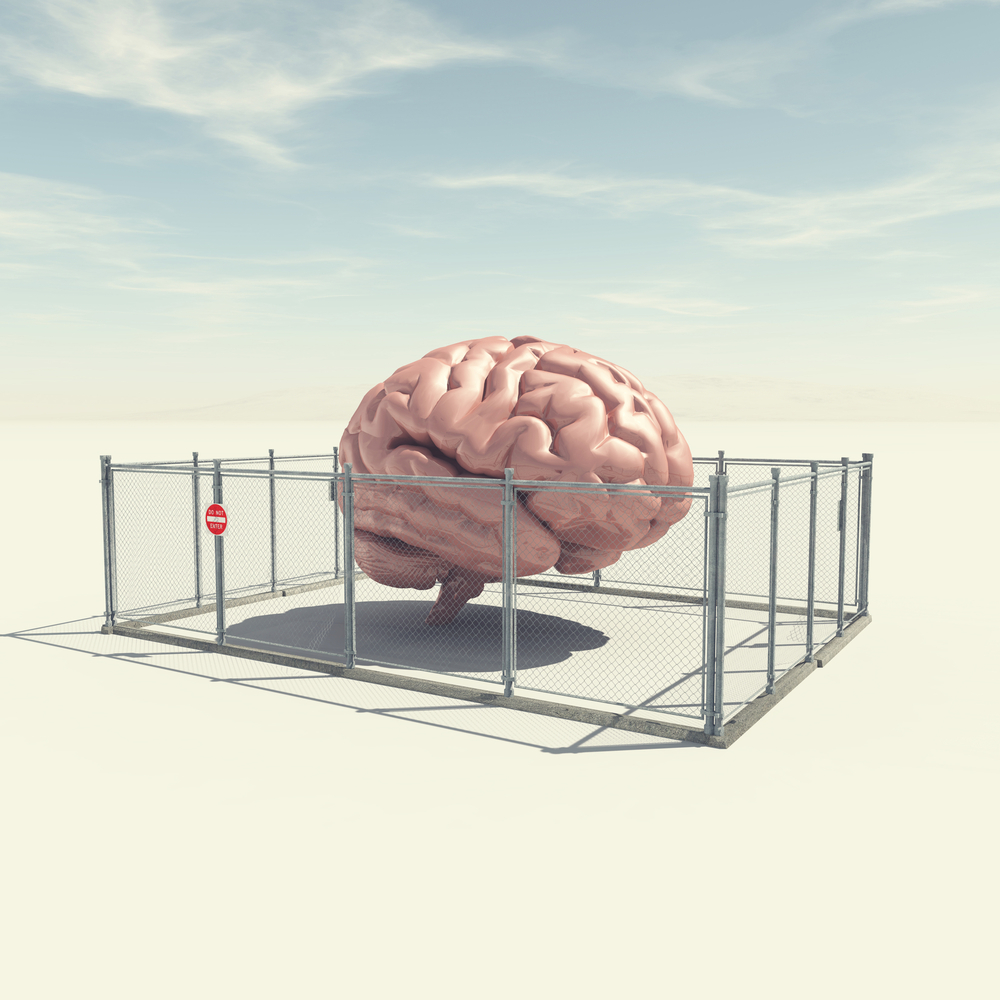
"The most desired trait in an employee is innovation. The most rewarded trait in an employee is compliance."
(If you know who originally said this, please tell me. I've searched. I've asked. Nothing. At this point I've accepted that it might just live rent-free in my brain forever without attribution.)
What I can tell you is this: In 20+ years of working with organizations navigating change - as a speaker, as a facilitator, and earlier as an employee - I have watched that quote play out more times than I can count.
And I've watched it play out in the most well-intentioned rooms, with the most well-intentioned leaders.
Which is the part that keeps it interesting.
“Give Me Ideas!” Yeah, Right…
Years ago, I was part of a small innovation team inside an organization that had gotten a little stale.
Leadership knew things needed to change. So they did what good leaders are supposed to do: They assembled a group of people and said, "We want ideas."
At first, it felt exciting. We brainstormed. We challenged assumptions. We threw out ideas - some practical, some ambitious, some that were probably just bad. The kind of messy, generative energy that real innovation actually requires.
And then the director of the group started responding.
Every idea got some version of:
"Yes, but..."
"That won't work because..."
"We already tried something like that..."
"That's not really what we're looking for."
At first, subtle. Then predictable. Then, if I'm being honest, a little hostile.
You can probably guess what happened next...
People stopped volunteering ideas. The energy dropped. And instead of thinking creatively, people started calculating: What answer will annoy her the least?
Nobody said it out loud. But everyone was thinking the same thing.
Just tell her what she already wants to hear.
That's the trap. And it doesn't require a villain. It doesn't require bad intentions. It just requires stress, urgency, and the completely human instinct to want things to go smoothly.
Why This Matters More During Change
I spend most of my time working with organizations going through change. New systems. New leadership. New direction. New uncertainty. Sometimes all four at once.
What’s interesting is that the moments that most require innovation are exactly the moments when leaders are least equipped to tolerate it.
Think about your own experience right now.
If you're leading people through a reorganization, an AI rollout, a new set of corporate values - stress is already high. People are tired. You don't want more tension. You don't want disagreement. You don't want someone poking holes in the plan when you need everyone rowing in the same direction.
So when you say "bring me ideas," what people often hear is: "Bring me ideas that sound enough like mine that they won't create friction."
And eventually? People stop trying.
This is why I believe most change efforts stall - not because of resistance, but because of apathy.
Resistance at least has energy. Resistance argues. Resistance pushes back. Resistance still cares.
Apathy is quieter. Apathy is what happens when people slowly learn:
"My ideas aren't wanted here."
"Speaking up isn't worth it."
"Just do the job and keep your head down."
And once that happens, you don't get pushback on the change. You get something harder to see and harder to fix: A team that's going through the motions. Present in body, somewhere else in spirit.
That's not a resistance problem. That's an apathy problem. And they require completely different solutions.
How About You?
So if you're leading people through change right now, here's what I'd ask you to sit with:
What are you asking for…and what are you actually rewarding?
Not what you intend to reward. What you actually reward.
Because your people are watching. They are remarkably good at reading the gap between what you say matters and what actually matters. And they adjust accordingly.
If innovation matters - if you genuinely want people who challenge assumptions, flag problems early, bring creative solutions - then the environment has to make that feel safe. Not safe like comfortable. Safe like: If I say the weird thing, I won't be quietly penalized for it.
Most leaders I work with genuinely want that. And most of their people don't believe it yet.
That gap is where change goes to die.
A Framework for Closing the Gap
This is where the YES AND mindset does something skills training can't.
Most change programs focus on mechanics. Here's the new system. Here's the process. Here's the rollout plan. And then leaders wonder why buy-in is low, why people seem checked out, why the plan is getting implemented technically but not really embraced.
The mechanics matter. But if the underlying mindset isn't there first, the mechanics don't stick.
YES AND - borrowed from the world of improv, where it's not just a performance technique but a way of operating - gives teams a shared language for this. Here's how I use it as a diagnostic for leaders navigating change:
Y - Yield to What Is
Be honest about reality. Not the reality you wish existed or the reality you told your boss exists - actual reality. Is your culture actually psychologically safe? Can people disagree without being subtly penalized? Can they surface bad news early without it being held against them?
You can't improve what you won't acknowledge.
E - Explore and Express Your Core
Who are your people at their best? And are you giving them room to actually be that? If you're asking for creativity and initiative while rewarding caution and sameness, that contradiction is broadcasting itself whether you mean it to or not.
S - Start Small
Innovation doesn't require dramatic gestures. Try one thing: At your next meeting, when someone offers an idea, respond with "tell me more" instead of "yes, but." That's it. Watch what happens to the energy in the room.
Small shifts change emotional dynamics faster than big structural overhauls.
A - Access and Apply Your Creative Genius
Constraints don't kill creativity. Fear does. When people feel safe enough to experiment - to be wrong without consequence, to try things that might not work - surprising solutions emerge. But creativity cannot survive in an environment where every idea feels like a performance review.
N - Notice and Nurture Emotion
Change is emotional. Innovation is emotional. People don't disengage because they're lazy or because they don't care. They disengage because they're overwhelmed, uncertain, or afraid - and nobody has acknowledged that.
Paying attention to the emotional temperature of the room isn't soft. It's the thing that determines whether anything else you do actually lands.
D - Dig Deeper
If people aren't contributing, don't assume they don't have anything to contribute. Get curious. Ask: What's making it hard to speak up? What concerns aren't being voiced? Where might we be accidentally rewarding compliance?
The real issue is usually sitting underneath the obvious one.
What This Actually Looks Like
Not long after seeing my program and reading my book, a leader told me something super cool (for me. And him).
He said that before, when a change was announced, his default was to immediately start managing everyone else's reaction to it. Figuring out how to get them on board, how to neutralize the resistance, how to keep things moving.
After, he said he noticed he was actually curious about the change. Not pretending to be curious. Actually wanting to understand it, dig into it, find the angles he hadn't considered.
He used the word "giddy."
That's not a communication training outcome. That's a mindset shift. And it started with him, not with the rollout plan.
One More Thing
I recently had a conversation with innovation strategist Melissa Dinwiddie on my podcast, and it went places I didn't expect.
We talked about why innovation fails inside organizations - not because people lack ideas, but because organizations unintentionally punish experimentation. The subtle ways cultures teach people that being wrong is dangerous. Why the loudest signal your team receives about what's actually valued isn't your mission statement. It's what happened the last time someone took a risk.
If this article hit something for you, the conversation with Melissa is worth your time. She comes at this from a completely different angle than I do, and the overlap between what she sees in creative organizations and what I see in change management is striking.
You can find it at https://plinkhq.com/i/1767790956/e/1000768384495
One More One More Thing
Most leaders genuinely do want innovation. Most employees genuinely want to contribute.
But when stress rises, we default to control. And control sounds suspiciously like: "Please comply."
So before you ask your people to be more innovative, more adaptive, more excited about the change that's coming, ask yourself whether you've made that feel safe, or whether you've accidentally trained them to stay quiet.
That's the question worth sitting with.
I help leaders turn the hidden enemy of change - apathy - into engagement, creativity, and forward momentum through the YES AND mindset. If you want help unleashing innovation (and actually rewarding it) while creating a culture that approaches change with excitement, contact me now!