
Have you ever worked hard to achieve something, reached your goal, and then wondered, "Is this really what I want?"
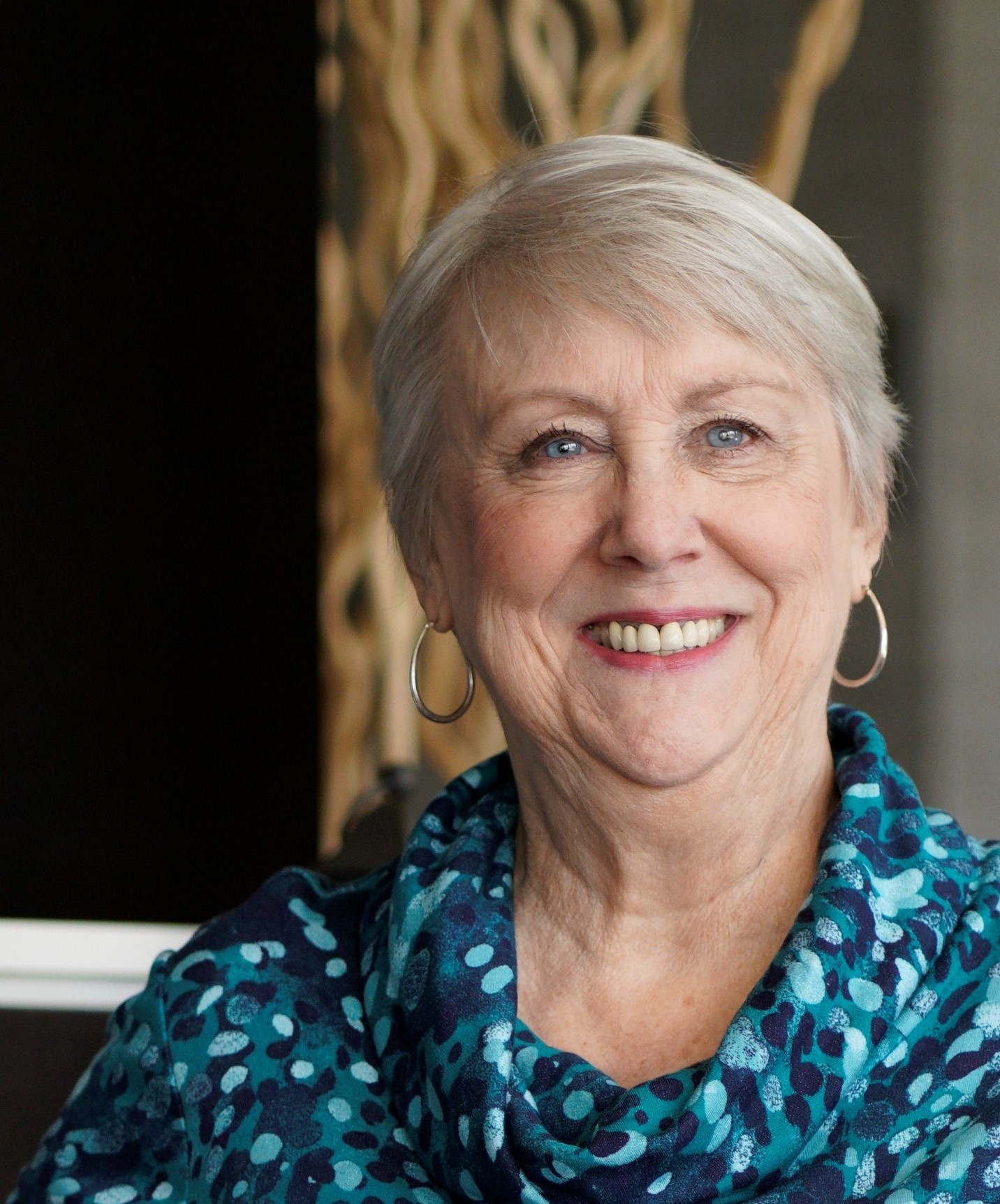
My guest today is Ann Ranson, a coach, consultant, speaker, and facilitator who helps people connect purpose with performance. Ann believes that one of the reasons we sometimes feel stuck or unfulfilled is that we're still operating with an outdated definition of success.
In this episode, Ann and I explore what it means to redefine success as our lives change, how understanding our natural strengths can help us make better choices, and why even the things we're really good at can sometimes drain our energy.
We also get into the difference between self-awareness and actually applying what we know about ourselves. This part of the conversation got pretty personal for me, as I shared some of my own struggles with focus, self-discipline, and trying to follow someone else's idea of what success should look like.
Ann shares some great insights about reframing our perceived weaknesses, quieting our inner critic, and finding ways to work with our natural tendencies instead of constantly fighting against them.
If you've ever felt like you're doing all the things you're supposed to do but something still feels a little off, this conversation might help you figure out why.
Key Takeaways
- Success needs to evolve: The definition of success that worked for you 10 or 20 years ago may not be the right one for you today.
- Self-awareness comes first: Understanding your strengths, values, and priorities gives you a starting point for making meaningful changes.
- Your strengths can be a gain or a drain: Even the things you're naturally good at can exhaust you in the wrong environment. The key is understanding when and how to use them.
- Pay attention to what brings you joy: Reaching a goal is important, but so is how you feel about the process of getting there.
- Work with your tendencies, not against them: Instead of beating yourself up for not operating like someone else, look for approaches that fit how you're naturally wired.
- Quiet your inner critic: Learning to reframe your perceived shortcomings can help you find creative workarounds instead of getting stuck in self-judgment.
Relevant Links
- Ann Ranson's website: https://annranson.com/
- Ann's free What Matters Most workbook: https://annranson.com/what-matters-most-workbook-2/
- Ann's Core Values Worksheet: https://annranson.com/core-values-worksheet-whats-important-to-you/
- Connect with Ann on LinkedIn: https://www.linkedin.com/in/annranson
- Learn more about Avish and his speaking programs: https://www.avishparashar.com/
Unedited Transcript
Avish
Hello, and — and welcome to the podcast. How are you?
Ann Ranson
I'm great, Avish. How are you?
Avish
I am great, and I'm very much looking forward to our conversation. I have checked out a bunch of your material and videos and things, and I think we've got some great stuff to talk about here. Before we launch into that for people who aren't familiar with you, could you just give us the quick, sort of, 1-minute bio overview of who you are and what it is you do?
Ann Ranson
Yes, absolutely. So, I'm a fourth-generation Native Texan, and although it's changed a lot over my lifetime, I'm really focused on the intersection of purpose and performance.
Ann Ranson
I work a lot with small groups; I also do a lot of work with nonprofits on strategic planning, facilitating board retreats, etc. And I really love this intersection of purpose and performance, because I think, you know, when I first started in business, purpose wasn't even, like, a word that came up in business.
Ann Ranson
And so I love, you know, I'll be curious to hear how you bring forward the "yes, and." I — I have threatened to take some improv lessons, but I haven't done that yet. You'll either affirm that I should stay away from it, or maybe I'll be inclined to do so.
Ann Ranson
So that is a little bit about my business: mainly coaching, consulting, and speaking, but really more on the facilitation side of that equation.
Avish
Okay. Yeah, and I'm happy to share how some of my ideas align, because as I was going through your material, I definitely made notes. I'm like, "Wow, this is very much like what I talk about," and we'll get to that.
Avish
But let's talk about the intersection of purpose and performance, or — I forget exactly how you phrase it — where perfor — I don't know if that's the exact phrasing you used. But I sort of, because of the work I do, intuitively understood.
Avish
But I'd like to dig deeper, maybe for people who are like, "Well, what does that mean exactly?" So what — what does that mean exactly for an organization or a leader? Like, how does that work?
Ann Ranson
Yes. So, one of the things that I've learned, both from my own career and my own professional journey, and from working with a lot of clients over the years, is that performance and, you know, checking the boxes and the metrics and all of that kind of stuff just does not feed our soul.
Ann Ranson
And I'll tell the story of when I left the radio business, which was my first career, and I had moved to DC, to Northern Virginia. And one day I was sitting at my desk — I worked from home was my first experience with that — and I was sitting at my desk, and I thought, you know, helping Chevrolet sell one more car just no longer feeds my soul. And at the same time, it was like, but wait, I'm so grateful.
Ann Ranson
I had done a lot of work in the radio industry, in the automotive category, and so I was grateful. I mean, they put food on the table and shoes on my son, but I felt like there was more that I could be doing. And I often say when I'm speaking is, "Okay, now I'm going to tell you what I did," and don't do it.
Ann Ranson
Because I just quit my job, like, a few days later. Called my boss in New York and said, "Oh, you know, I just don't want to do this anymore." And no plan. Here I am, I do strategic planning now, no strategy, no plan, and — but I was following my heart and what I felt like was purpose.
Ann Ranson
Now, my purpose, as most of us, you know, we don't live necessarily with the same purpose. Some people use the word "meaning" in place of "purpose." It's whatever it is that I say feeds your soul. I'd be curious how you might — what words you might put on that idea of feeding your soul.
Avish
So, in my work, I released a book earlier this year called "Say Yes And To Change." It's my third one. I took "Yes And" and turned it into an acronym.
Avish
And the E stands for "Express and Explore Your Core." So that's sort of my approach on it, is that one of the reasons I love improv comedy — and frankly, you already, you know, you said whether you should or should not — I mean, jumping in with both feet without a plan, I mean, that literally is improvisation.
Avish
It's what you already did in your career.
Ann Ranson
I guess I've had practice.
Avish
You've had some practice. But so one of the reasons I love improv as a performance is when you're doing it right, it is basically the most authentic you that comes out.
Avish
Because there is no writing, there's no directing, there's no second take. You are the actor and creator and blocker. And so that kind of is what led me to this — this exploration of creativity. And so this is what I work with people on, about how to get what's inside of you out.
Avish
Because that was going to be my next question for you, is, you know, how did you then figure out what your purpose is, and how do people figure out the purpose? So for me, it's really about training the mind to bypass the filter, to generate ideas fast, so you can get through all the conscious gunk to your subconscious.
Avish
And I train that whether it's performing improv or whether it's helping, you know, develop purpose and mission. So what is kind of your approach to getting to the purpose?
Ann Ranson
Well, I think there's a few things. A lot of mine in my personal journey is spiritually based. But not all of my clients come with that bias towards the spiritual components of meaning and purpose. So I start with — I work with Gallup Strengths. There's a company called Core Clarity, which is who I took my training with, and it's kind of a wraparound program to CliftonStrengths. Are you familiar with CliftonStrengths?
Avish
I am. I've taken it twice, but the last time was a number of years ago. But yeah.
Ann Ranson
Okay, you'll have to send me your strengths. I'll send you some reports.
Ann Ranson
The philosophy is that when we operate from our strengths, we're more productive, we're happier, and all around, our life is moving towards us, as opposed to the things that we go, "No, wait, I don't want to do that. I don't want to do that."
Ann Ranson
And often, corporate is set up so, you know, you start a new job, and they send you to HR, and they say, "Okay, well, we have these assessments that we want you to take." And so you do your assessments, and the results come back, and they say, "You know, Avish, you are great with detail, but you suck at people skills. And so we're going to send you to a class to learn to be better at people skills."
Ann Ranson
Well, the fallacy in that, of what's — what we call strength psychology, which is what Don Clifton created in this whole strengths psychology, is that I'll never be as good at the things I don't have strengths in as the person who has strengths in that.
Avish
Yep.
Ann Ranson
So why send me to learn something I'm never going to be as good as you are at it, and you're going to frustrate me, and I'm not going to be as productive?
Ann Ranson
And so I always start all of my clients, you know, it's kind of a requirement that they give me their strengths, or through me they, you know, take the assessment.
Ann Ranson
Because self-awareness is a very important piece to this. And how do we find our purpose if we don't know who we are, if we don't know what's important to us?
Ann Ranson
Probably the second step — go ahead, I think you were going to say something.
Avish
Well, I was going to kind of, yeah, say something slash ask. I think — but I might be moving on to the second step. You said the first step is understanding.
Avish
And I now am speaking from personal experience. So I've done the Clifton a couple times, and I've done some other just analysis, like, a couple times. I'll, like, look at everything I've done successfully over my life, and then I found, like, the commonalities. So the self-awareness is the first step.
Avish
Then the second step — and this is what I was going to ask you about — is even knowing that these are my strengths and these are the environments and conditions that have led me to the greatest success, I still often find myself completely ignoring them and just sort of going along with a plan I read here or what seems most immediate.
Avish
So kind of — and if you were going to say something before that, feel free, but, like, my next question was going to be, well, okay, figuring it out is great, that's the first step. How do we then make sure we're actually living it and applying it?
Ann Ranson
Yeah. Yeah. Well, that is the million-dollar question for all of us who consult and coach. Because we come in and we work through these great solutions, and then we walk out the door. And so how do we know that anybody's actually going to do it?
Ann Ranson
And I think that part of it is, I created a workbook. It's called "What Matters Most." And it goes through six dimensions of our lives. We all have them. And we — the process of the workbook is I start out and I give myself a score from 1 to 10. How well do I think I'm doing around health, or how well do I think I'm doing around finance, etc.? And that's kind of the easy step.
Ann Ranson
The next step is, okay, I gave myself a 2 on health. What would a 10 look like? What would a 10 look like? And that's where we go back to our strengths and we go back to whatever our belief systems, etc., to help begin to say, "Okay, well, I think, you know, if I weighed X pounds, if I could lift so many pounds, these would be the things," then I could score myself as a 10. So now we have a gap. I gave myself a 2. Here's what a 10 would look like.
Ann Ranson
And then we begin to build steps. How do I get from a 2 to a 10? And self-discipline has to come in here somewhere. And, you know, because even if I'm your full-time coach and we meet every week, you're only with me an hour a week. And so you have however many other hours in the week that you may or may not be following through on those things.
Avish
Well, it's interesting. So, and I agree with all of that. I also have the self-awareness. My sense of self-discipline is way lower than I would like to, you know, like it to be, and I work on that.
Avish
But I've also — and I want to tie this into something in one of the articles you had sent me to read about when success feels heavier. Because in my framework, the N stands for Notice and Nurture Emotion. And so it's about, like, feelings, right? And your — your article was about when success feels heavy. So it's like, you're doing the things, you're getting the results, but it doesn't feel good.
Avish
And when I think about taking actions, like to move from a 2 to a 10, what I'm trying to do now, and I'd love to get your thoughts on this, is, yes, self-discipline is important, obviously. But what I'm also trying to pay attention to is, like, when I say, "Here's what I'm going to do," how do I feel about that?
Avish
Because I only half-jokingly say, about every 3 to 5 years, I start running again for exercise. And then about 4 weeks later, I remember, I hate running. And so, like, you know, the self-discipline pushes you to start, but, like, evaluating, like, all right, well, here's how I want to move from a 2 to a 10.
Avish
And then when I think about it, do I feel heavy? Do I feel light? Do I feel excited? So I'm curious kind of what your thoughts are about that or how that might work into what you're saying.
Ann Ranson
Well, you know, although a lot of experts think that — think that this journey for joy or fulfillment and meaning and purpose is a bunch of hogwash, well, I believe that's why we're here.
Avish
Yeah.
Ann Ranson
You know, as human beings. Otherwise, I'd be a squirrel, you know, running through the yard. Great. Not much purpose involved in that, I'm guessing. And so I don't have a shortcut for that.
Ann Ranson
Because in the process of "What Matters Most," when you're identifying the 2 or what the 10 would look like, we have to prioritize what brings us joy. Because to your point, if I'm excited to run, if I love running, you know what the difference is. I'm going to run. You're not because you don't love it.
Ann Ranson
Now, of course, in real life, I also do not run, nor do I like to run. So you and I would both be on the bench in the park watching the other people run by.
Ann Ranson
And so I think that is — if we can stay — this is kind of one of my core philosophies or beliefs, is that what we focus on expands. And by that, if I focus on, "Oh, every time I run, my feet hurt, my knees hurt, whatever, am I going to do it?" Probably not. If I focus on the outcome — and of course, this ties in with all our business work as well — you're looking for an outcome. You go in and coach or consult with a group, they're buying an outcome.
Ann Ranson
And so if I can stay positive on what are the positive things and let go of the things that deplete my energy. Like, there's an activity in our strengths work, and it's called Gain or Drain. And so you get your top five strengths, and what about — so my top five, well, they're on the screen, I think: Empathy, Connectedness, Strategic Maximizer, and Relator.
Ann Ranson
So how does each of those — so how does empathy is a gain for me, and how is it a drain for me? And then I go to the next one, Connectedness. How is this? And the more I can stay focused on the gain.
Avish
So if you could explain that a little bit more. So these are your strengths. These are the things you excel at. But even the things that are your strengths can have both a gain and a — can actually have a drain component to them as well?
Ann Ranson
Yes.
Avish
Could you give an example? Like, what does that — like, how does that work, I guess, for lack of a better term?
Ann Ranson
So let's use empathy as an example.
Avish
Yeah.
Ann Ranson
My number one strength. So growing up, I was called a crybaby. And they were not paying me a compliment. It was, you know, what was wrong with me, I guess. And so I grew up believing that my emotion was a bad thing. Because people knew how I felt. I mean, I don't know how to hide how I feel.
Ann Ranson
When I learned about empathy being my number one strength, it was like, "Oh, I like the idea of empathy better than crybaby." But here's the thing. The plus and the minus of that, empathy means that we feel what's going on around us. So imagine you walk into Grand Central Station on a Friday afternoon at 6:00 p.m., and you're probably not going to experience relaxation and peace and everybody getting along.
Ann Ranson
And so you feel — I feel — the frenzy of, "Oh my God, I need to get to this track or that track, and these people are in my way." So that's one example of the pros and the cons. Yes, I feel things very deeply, but I feel the good, the bad, and the ugly. So I've had to learn to manage that as best I can.
Avish
So to really increase your joy and kind of basically marry your purpose and your performance, you want to find situations where you can use your empathy, but in the environment where it's a gain, as opposed to — which is interesting, and maybe, you know, you'll let me know if there's something to talk about.
Avish
But, you know, you talked about how, you know, you've done speaking on and off, and, you know, you do a lot more kind of coaching and facilitation and consulting. And it's almost like, as you're saying that, one to many is not necessarily your biggest — like, where the empathy is going to give you the gain, right?
Avish
The big keynote audience versus small group facilitation or coaching, where you can really kind of use that. So is that kind of an area of, like, how you can think about using your strength as a gain or a drain?
Ann Ranson
I mean, that is the exact example. It's one of the reasons we did a — our chapter did a — what do they call them? Showcase. So I bought a slot so I could get some video and all that kind of stuff.
Ann Ranson
I've never been worse. I did not know my name. I could not get three words out. And I believe that everything is an opportunity for me to learn and grow.
Ann Ranson
And so I came home and I did a lot of self-reflection. So what is this trying to teach me? And I arrived at what you so brilliantly and so quickly is, I thrive in small groups. I don't want to be a keynote speaker. That's not — I don't derive the same joy or — I don't get the feedback.
Ann Ranson
Now, people who do a lot of keynoting — in fact, I'd love to hear what you say about that — but maybe you have a different way of getting the audience feedback when there's 500 or 1,000 people in the room. I don't have enough experience in that venue to know how to do it.
Ann Ranson
So I love small groups because we're all together and I can sense what's going on. I can use my strengths, my — in particular, my empathy, to see, okay, people are getting restless. I can feel people are getting restless. Okay, let's do a little activity or whatever that may be.
Ann Ranson
Does that answer your question?
Avish
Yeah, no, that's great. And it's funny. I said I've done the strengths a while ago. I don't remember exactly, but I'm pretty sure they were all big-picture ones. Like, I believe Strategic was my number one. Maximizer sounds familiar. There was one, I forget the — I think Vision was one. Ability to explain complex —
Ann Ranson
Futuristic.
Avish
What's that?
Ann Ranson
Futuristic.
Avish
I think that might be it. There was one that the description was Ability to explain complex ideas simply, which was great as a speaker. You know, but they're all big-picture. And what I was — I've been a performer since high school and a keynote speaker.
Avish
And you and I were just talking beforehand about, now I'm adding in some coaching and consulting. But my energy comes most from the big audiences. It's the exact opposite of you. Like, put me in front.
Avish
And I think part of that is that whereas you, as an empath or someone with empathy, you want that close connection. Me, as a performer, I almost prefer just a little bit of distance. And, you know, the performance, the keynote gives you a little bit of, like, a wall between you and the audience a little bit. You're performing.
Avish
And, you know, frankly, from an insecure standpoint, the larger the crowd, a few faces here or there who maybe aren't as into it, like, not a big deal. You get the overall energy from the room. Small group, one person's not into it, all my attention goes on to, like, "Ah, I'm doing terribly."
Ann Ranson
Yes.
Avish
So it's very interesting. Now I am moving into doing more consulting. I just mentioned to you I kind of booked my first consulting-type contract as far as, like, this kind of stuff. I've done some stuff before. But it does make me aware.
Avish
Because I think the thing with the strengths and the joy and the gain, and correct me if I'm wrong, obviously, you know, we're talking about the real world. So it's not about completely shutting off any opportunity that doesn't — but rather looking at the opportunity and saying, "How can I bring my strengths to this?" Right?
Avish
So it's not like, "Oh, I should never do that because I'm only a keynote speaker," but rather, "Well, this is to be aware of, and how can you bring your strengths to this despite the environment being differently?" Is that correct?
Ann Ranson
Well, and you've hit on, you know, one of the main premises of strengths psychology as a whole body, is that it doesn't mean that I don't have to do things that I don't have strengths in.
Ann Ranson
You know, and particularly if I were an employee and I had a boss telling me what to do, I can't go, "Oh, no, I'm so sorry. I don't have a strength to do Futuristic," as an example. You know, I'm good. I'm good right here.
Ann Ranson
And so it does not — they don't — our strengths don't give us an excuse why we can't or don't want to do something. It just means, generally speaking, it may be a little harder for me.
Ann Ranson
If you've got Futuristic and I don't, and we're working on our 10-year plan, it's going to be a little bit harder for me than it would be for you having Futuristic. Now, I have Strategic, which is another future-looking strength, but you put those two, and if you have both strength — excuse me, Strategic and Futuristic, that's going to give you a skill set to use that I'm never going to be as good at in that venue.
Avish
And I think a lot of this is, as you said, kind of a way of, like, what's your next step going to be? How can I move forward? Right? It's like, well, once I know my strengths, it's not necessarily changing everything in my life or refusing to do things — oh, not my strength — but it's like looking forward.
Avish
And this kind of leads into this other area that you've done work in, this whole idea of reimagining success, right? Which is about people who are maybe at a later stage in life than we think about. I don't know if middle age is the right term, but, you know, some age. And, you know, a lot of people think, "Well, this is what I've always done my life. I'm kind of stuck in this lane."
Avish
But your approach in working with people is, no, like, you don't. Like, it's not too late. You can pivot. And I think using the strengths as a way of kind of the first step in kind of figuring out — because now we see people are working and joyfully working into their, you know, 70s and 80s now.
Avish
So I've babbled on long enough. I should let you talk about it since it's your stuff. So talk a little about kind of reimagining success and how that all sort of fits into what we've been talking about so far.
Ann Ranson
Well, my own journey is it started when I left radio. And I didn't know that's what I was doing, that I was reimagining success. I just knew that this no longer felt my soul, and I was going to fed my soul, and I was going to do something about it.
Ann Ranson
But what I've learned through my own experience and my clients is, as our life changes, our definition of success should also change. And we box ourselves in when we think, "Oh, my definition of success when I was 33 was if — " well, I'll tell you the story.
Ann Ranson
When I started in the radio business, I was a secretary. And I think I made $500 a month. And there were salespeople, and they dressed really good. And they came and went throughout the day. They weren't stuck behind a typewriter.
Ann Ranson
And then I found out some of them made more than $1,000 a month. And I thought, "Oh my God, if I could make $1,000 a month, that's what success would be." And, well, then, of course, I got the $1,000 a month.
Ann Ranson
And then I thought, "If I could go into sales, because I'd get to leave and I'd have cool cars and clothes and, you know, freedom, and this would be great." And then I went into sales. And so it was like, "Oh, okay. Well, then I want to be a director. I want to be a sales director." And so then that became my definition of success. Wow, I'd be successful if I could get that title.
Ann Ranson
And often we don't change our definition of success as we go through life stages. Like, what I needed and what were my priorities when my son was 2 years old was very different than when he graduated from high school and went off to college. And so that's where I think feeling trapped is because we don't update.
Ann Ranson
It's like we're running an old operating system. Like, from the first IBM computer that came out 50 years ago or whenever that was, we're running that same operating system, and we don't know why we don't feel fulfilled.
Avish
And it's interesting because each one of those goals you set, kind of the new goal, the new goal, the new goal, also didn't really seem to connect to all the stuff we've talked about, about your strengths and your joy.
Avish
It was just like the next external sort of, "Oh, here's what the next step should be," right? And I think that's what a lot of people get on a career path. I'm doing air quotes here.
Avish
And the goals sort of get set for you instead of you really taking the time to think, like, "What do I — what does success really look like for me?"
Ann Ranson
Well, and I didn't know about — well, strengths didn't exist, first of all. They didn't exist. And I didn't know about that what we focus on expands. I didn't know about mind-body connection.
Ann Ranson
I didn't know about, you know, Norman Vincent Peale and people who espouse positive thinking and, you know, the great leaders over the last 50 years. I didn't know any of that.
Ann Ranson
And so I could only see the next rung on the ladder. It's like, "Oh, okay. I see that over there. I'd like more of that, please."
Avish
Yeah.
Ann Ranson
As opposed to what would feed my soul, I didn't know that was a question.
Avish
Yeah. Yeah, I get you've said that at the beginning, like, purpose is just not something that, like, you just got to go to work. And in fact, there's a certain mentality, you know, from growing up where it's like, work's not supposed to be fun. Like, you're not supposed to get joy from work. It's called work for a reason, right? That's the —
Ann Ranson
Yes. Yes.
Avish
So it is a very different way. So is reimagining success something you do with clients? Like, do you work with people, like, one-on-one? Like, how does that work? How does that fit into your business model?
Ann Ranson
Well, it's actually when I speak, that's normally what I speak about.
Avish
Oh, okay.
Ann Ranson
So that's the main thing is because I'm — there's no processes attached to it, no consulting. I mean, there could be, you know, if I sold a follow-on package or something. But basically, that is the majority of it. It gets broken up into pieces when they fit with my coaching clients.
Ann Ranson
I haven't ever — I haven't met anybody who thinks in terms of, "I want to reimagine success." That's the outcome I'd like somebody to help me with. More often, it's I hear, "I feel stuck." You said it earlier. "I feel stuck."
Ann Ranson
I've done the same thing for 23 years. Can't teach an old dog new tricks. I guess I'm stuck here. I'm going to have to stay there.
Ann Ranson
Fortunately, I didn't get that email. Because I've reinvented myself, I don't know, 5 or 10 times.
Avish
Yeah, I find I haven't quite figured out how to position this that aligns properly with my business and monetarily and whatnot. But I think the one thing that I would have a passion or purpose for, I kind of use a phrase like helping people scratch an itch.
Avish
Like, they don't — it's like they're at a certain point in their life, things are fine, you know, they're financially stable, everything is okay, but there's like an itch. And they're like, "I don't know what that is." And when you don't know what it is, you just tend to ignore it and go about your life.
Avish
And I love that idea you're saying. You're kind of like, well, helping people, you know, because it didn't happen to you, and you're very, like, fortunate. And
Avish
so I forgot. I was going to ask a question about that, but then I kind of got — I got side. I sort of lost my train of thought there. It happens sometimes.
Avish
So let's say you've got a — let's say there's someone listening right now, and they're in one of those positions. Either they know they need a change, but they're not sure what to do, or they don't know they need a change, but they do feel that, like, itch that, you know, life is fine, right? That's the word, fine.
Avish
Where — what is the start? Is the start, like, a strengths finder, or is the start a self-reflection? Like, what is kind of the first step in this process or moving down this path?
Ann Ranson
Well, I think broadly, it's self-awareness. Because I believe that we can't fix or we can't
Ann Ranson
manifest things if we don't know what we want. And so I do go back to strengths and the What Matters Most workbook as starting points. Because if I see I've given myself eight scores in everything is great except health. Now, I could pick another dimension to work on, but, like, the signal is maybe you want to work on health. And so I think that it just gives you so many clues about, like, where to point the ship.
Ann Ranson
Okay, we're going in this direction. I believe life is a journey, and we're going to have ups and downs and back and forth. And it's just — it's just a journey. To me, it's the journey, not the destination.
Ann Ranson
In business, we're often taught it's the — it's the number. Get me the number. And a lot of the positions that I was in, they didn't particularly care how I got to the number, as long as I got to the number. Well, now I'm all about the how.
Avish
Yeah.
Ann Ranson
Because the how is the part that I think feeds our soul.
Avish
Do you have any, like, tips or advice for a, say, an ADD person, hypothetically speaking, not talking about anyone in particular, but who goes through a process like that and comes up with, like, well, here's like the six areas of my life, and look, this is the one that needs the most help?
Avish
But the more time you spend working on just one thing, which is very important from a focus standpoint, your mind starts going crazy about how you're ignoring the other. Like, I find this a lot, right? Everyone says, like, monotasking, focus on one thing at a time.
Avish
But I find if I focus on just one thing, after a very short period of time, I start feeling stressed or guilty that I'm not also working on all the other things or I'm neglecting this. And so you work on this, and then I jump. And I don't know if this is something you've encountered, or do you have any thoughts on that?
Ann Ranson
Well, I mean, I think it goes back to self-awareness. So if I know that I have a short attention span, and I do, it's not necessarily an ADD kind of thing. It's like I like starting things better than I like finishing things. So I get these ideas. It's like, oh, Avish, I've got to do, you know, X, Y, and Z. And I'm very energized, and I'm very excited. And then a week or a month, I go, oh, yeah, I am still doing that. Yeah.
Ann Ranson
And so when we know our tendencies, I'm a huge believer in the concept of reframing. So instead of me judging myself, what is wrong with you, Ann? You just need to focus on your health. That was what the score was, and that's what you said you wanted to work on. It's like, no, I have a short attention span.
Ann Ranson
So I'm going to work on health for a month, and then I'm going to pick a different dimension for the second month so that I have some variety, because variety is important to me. And then maybe in the third month, I'm going to pick a third dimension. So I think when we can reframe things from it being a weakness or a shortcoming or there's something wrong with me, then I'm more open to finding a workaround solution. Would that work, do you think?
Avish
And it's something that I've sort of thought about. I just never really fully implemented. You know, like we talked about the workout thing. And whether it's running or whatever, you know, I'm usually very good for a while.
Avish
Like, even just recently, I started a workout routine, and it was a 21-day program, and I finished the 21 days. And then I, like, kind of kept going, and then I started feeling some aches and pains. And then it has completely tabered off, and that's been like a week. I'm like, oh, I'm feeling sorry for myself. This hurts. I got to rest.
Avish
But knowing myself, I should plan more in blocks. Be like, look, you'll work out because you'll be super into it, but do it intensely for like a month. But then plan after that month to shift.
Avish
And I think for me, one of my, I don't know, failing is the right word, but like the societal pedestaling of like the, I mean, the discipline, right? Like the Olympian who just like every day grinds for two years, and like it just, it's been so ingrained. I feel like there's this almost, as opposed to following my own strengths, it's trying to follow this ideal of someone else.
Avish
Like, oh, well, if I was really committed, I would just work out every day hard for 30 minutes to an hour. And so it's sort of deprogramming and then leaning into my strengths as opposed to what someone else does.
Ann Ranson
Well, and I think this leads into do you know who Mel Robbins is?
Avish
Yep.
Ann Ranson
So she wrote a book. Well, she's written several, but her most recent book came out two or three years ago called Let Them. And I'm on her mailing list, so I got a mailing. It's coming out. If you pre-order it, I'm going to do a free webinar.
Ann Ranson
So I signed up, ordered the book. The philosophy is that we create stress for ourselves when we try to control things that are outside our control. And so, and I got a perfect, this came out right before Christmas, and we started trying to find a date on the calendar for Christmas.
Ann Ranson
Okay, when is everybody available? And I said, you know, I'm the United Nations. I'm single. I can be anywhere, anytime. Just tell me when. We never found a date.
Ann Ranson
As we were going through that, I was like, well, what is wrong with these people? Make a commitment. Tell them you're not going to be there that day, that you're only available such and such a day. Until I realized I'm trying to control things not in my control. And who feels stressed? They don't feel stressed.
Avish
Yep.
Ann Ranson
I feel stressed. And so I think a lot of it is
Ann Ranson
I call the critical judge inside my head, CJ. And it stands for critical judge. And I think we all have one who says we're not smart enough, pretty enough, cute enough, whatever that thing is.
Ann Ranson
And I use Let Them even on myself. It's like, back, back, back, back, back, back, judging myself because I'm not sticking with something instead of finding a workaround. And so I think it's another one of those simple little tools.
Ann Ranson
And I will actually sometimes, if she's on a roll, then I'll say, okay, we'll go into the library. I'll send her somewhere. Now, of course, I'm not physically sending anybody anywhere. But it's to get her out of the, I don't know what part of my brain it is, but the active part of my brain, because I'm finally learning that what other people think is none of my business.
Ann Ranson
And that for me has been one of life's greatest lessons, is to not care what other people. So you're an Arnold Schwarzenegger, and you work out 48 hours a day. Okay, great. God love you. I think that's wonderful. I will be resting on the couch.
Avish
Well, that is great. And I think that's a nice place to sort of land the plane here, as one of my friends says. Because I'm going to use that and take that. I appreciate that.
Avish
I'm going to finish up with one more question. Before I do that, if you could share, if people want to learn more about you, watch or read your stuff, or, you know, hire you as a facilitator, speaker, coach, whatever, what are the best ways for them to find and connect with you?
Ann Ranson
Thank you. So my website is my name, Ann Ranson. And I'm active on LinkedIn, not quite as much on Instagram or Facebook.
Ann Ranson
And I have different free resources. The workbook I mentioned is a free resource. I have other free resources, you know, a core values worksheet.
Ann Ranson
Again, in this idea of us knowing who we are, having that self-awareness, most of us think we know what our values are. But if I ask you right now, what are your values? If you're like most people, you're going to kind of fumble around and go, oh, well, integrity and honesty.
Ann Ranson
And, you know, and those are all beautiful things. I'm not saying that there's anything wrong with that. But maybe being gracious is really what a value that really makes sense. So there's other free resources that are available there as well.
Avish
Oh, that's great. We've talked a lot about self-awareness. I didn't realize the What Matters Most workbook is a free resource. So yes, definitely go check that out. Start that journey. And then check out Ann's stuff.
Avish
And I like to end, I'm going to end with the question I try to always end is, you know, I talk about the idea of saying yes, Ann, instead of yes, but because I honestly believe the world would be a better place if everyone started with a default mindset of yes, Ann. So let me ask you, what is one small thing that you believe if everyone did, it will make the world a better place?
Ann Ranson
I think it'd have to come back to self-awareness. Because that's, we can't live a rich life if we don't know what rich life means to us. You know, you may have a gorgeous life, full, meaningful, rich, but it may have nothing to do with anything I care about. Does it make yours any less valuable to you?
Ann Ranson
And so I think if I were going to say yes, Ann, it would be yes to self-awareness and all the benefits. It helps us stay in the present moment, which I believe is another key indicator. You know, if we're constantly worrying about the future, which can be difficult for somebody with futuristic, because your tendency is to look out that way. So I'd probably have to stay with self-awareness.
Avish
Okay. Well, that is a great answer. I know I learned a lot. I'm going to take some of what we talked about and start applying it to myself. So thank you for that.
Avish
Thank you for being on. If you're listening, be sure to check out all of Ann's, her website, her free resources. You can start this journey as well. And we'll link to all of that in the show notes as well.
Avish
Ann, thank you so much. This was a fantastic conversation. I'm glad we had a chance to chat.
Ann Ranson
It was wonderful. Thank you so much. I really enjoyed our conversation.
Avish
I did too. Thank you.